Quotessence
Home / Quotes / Quote by Robert Green Ingersoll

Quote by Robert Green Ingersoll

Work

The Works of Robert G. Ingersoll

This book is a compilation of various writings by Robert G. Ingersoll, covering his extensive career as a public speaker and legal professional. It includes his famous speeches on topics such as religion, ethics, and the rights of individuals. The collection offers insight into Ingersoll's advocacy for civil liberties and his role in shaping American thought during the 19th century. more

Author
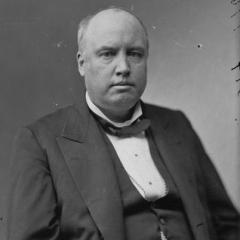
Robert Green Ingersoll

Robert Green Ingersoll was a prominent lawyer, orator, and freethinker. Born on August 11, 1833, and died on July 21, 1899, he was one of the most celebrated orators in 19th-century America. Known for his criticism of religion and government, Ingersoll was a leading advocate for individual freedom. more

You May Also Like

“The period of Catholic ascendancy was on the whole one of the most deplorable in the history of the human mind. . . . The spirit that shrinks from enquiry as sinful and deems a state of doubt a state of guilt, is the most enduring disease that can afflict the mind of man. Not till the education of Europe passed from the monasteries to the universities, not till Mohammedan science, and classical free thought, and industrial independence broke the sceptre of the Church, did the intellectual revival of Europe begin.”

“In medieval times, the Church used to sell 'indulgences' for money. This amounted to paying for some number of days' remission from purgatory, and the Church literally (and with breathtaking presumption) issued signed certificates specifying the number of days off that had been purchased. . . . And of all its money-making rip-offs, the selling of indulgences must surely rank among the greatest con tricks in history. . . .”

“Benito Mussolini had barely seized power in Italy before the Vatican made an official treaty with him, known as the Lateran Pact of 1929. Under the terms of this deal, Catholicism became the only recognized religion in Italy, with monopoly powers over matters such as birth, marriage, death, and education, and in return urged its followers to vote for Mussolini's party. Pope Pius XI described II Duce (“the leader”) as “a man sent by providence.””

“The decline of witch-belief was . . . entirely the product of religious skepticism. . . . The Catholic Church did not reform itself on this matter; it was forced by outside pressure to reform. To be sure, the Protestant churches were no better in this regard; it is simply that they had less time - only two or three centuries - to engage in the torching of witches. After all, John Wesley, the founder of Methodism, stated quite correctly that disbelief in witches meant a disbelief in the Bible.”