Quotessence
Home / Authors / Lord Acton
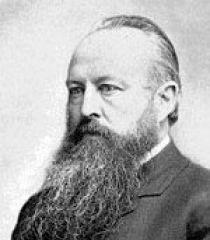
Lord Acton

Lord Acton Quotes

Author

Filter quotes by topic

Famous Lord Acton Quotes

“It was from America that the plain ideas that men ought to mind their business, and that the nation is responsible to Heaven for the acts of the State, - ideas long locked in the breast of solitary thinkers, and hidden among Latin folios, - burst forth like a conqueror upon the world they were destined to transform, under the title of the Rights of Man... and the principle gained ground, that a nation can never abandon its fate to an authority it cannot control.”

“The true guide of our conduct is no outward authority, but the voice of God, who comes down to dwell in our souls, who knows all our thoughts, to whom are owing all the truth we know, and all the good we do; for vice is voluntary, and virtue comes from the grace of the heavenly spirit within.”

“Liberty, next to religion has been the motive of good deeds and the common pretext of crime, from the sowing of the seed at Athens, 2,460 years ago, until the ripened harvest was gathered by men of our race. It is the delicate fruit of a mature civilization; and scarcely a century has passed since nations, that knew the meaning of the term, resolved to be free. In every age its progress has been beset by its natural enemies, by ignorance and superstition, by lust of conquest and by love of ease, by the strong man's craving for power, and the poor man's craving for food.”

“The barbarians, who possessed no books, no secular knowledge, no education, except in the schools of the clergy, and who had scarcely acquired the rudiments of religious instruction, turned with childlike attachment to men whose minds were stored with the knowledge of Scripture, of Cicero, of St. Augustine; and in the scanty world of their ideas, the Church was felt to be something infinitely vaster, stronger, holier than their newly founded States.”

“Neither an enlightened philosophy, nor all the political wisdom of Rome, nor even the faith and virtue of the Christians availed against the incorrigible tradition of antiquity. Something was wanted, beyond all the gifts of reflection and experience - a faculty of self government and self control, developed like its language in the fibre of a nation, and growing with its growth.”

“The idea that the object of constitutions is not to confirm the predominance of any interest, but to prevent it; to preserve with equal care the independence of labour and the security of property; to make the rich safe against envy, and the poor against oppression, marks the highest level attained by the statesmanship of Greece.”

“The State is competent to assign duties and draw the line between good and evil only in its immediate sphere. Beyond the limits of things necessary for its well-being, it can only give indirect help to fight the battle of life by promoting the influences which prevail against temptation--religion, education, and the distribution of wealth.”

“The epoch of doubt and transition during which the Greeks passed from the dim fancies of mythology to the fierce light of science was the age of Pericles, and the endeavour to substitute certain truth for the prescriptions of impaired authorities, which was then beginning to absorb the energies of the Greek intellect, is the grandest movement in the profane annals of mankind, for to it we owe, even after the immeasurable progress accomplished by Christianity, much of our philosophy and far the better part of the political knowledge we possess.”

“I saw in States' rights the only availing check upon the absolutism of the sovereign will, and secession filled me with hope, not as the destruction but as the redemption of Democracy.... Therefore I deemed that you were fighting the battles of our liberty, our progress, and our civilization, and I mourn for the stake which was lost at Richmond more deeply than I rejoice over that which was saved at Waterloo.”

“For centuries it was never discovered that education was a function of the State, and the State never attempted to educate. But when modern absolutism arose, it laid claim to everything on behalf of the sovereign power....When the revolutionary theory of government began to prevail, and Church and State found that they were educating for opposite ends and in a contradictory spirit, it became necessary to remove children entirely from the influence of religion.”