“The State is competent to assign duties and draw the line between good and evil only in its immediate sphere. Beyond the limits of things necessary for its well-being, it can only give indirect help to fight the battle of life by promoting the influences which prevail against temptation--religion, education, and the distribution of wealth.”
Quote by Lord Acton
Work
The History of Freedom (and other Essays)
This book is a compilation of essays that delve into the historical evolution of the concept of freedom. The essays likely cover various periods, cultures, and perspectives on the nature and significance of freedom. more
Author
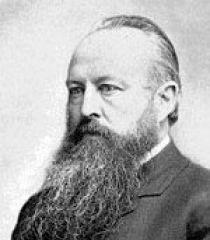
Lord Acton
British historian and political theorist, renowned for his profound insights into the relationship between freedom, power, and corruption. Lord Acton was one of the most influential thinkers of the Victorian era, and his works are still widely cited today. more
You May Also Like
Source: The History of Freedom: Great Event
“I have reached the end of my time, and have hardly come to the beginning of my task.”
Source: The History of Freedom (and other Essays)
Source: The History of Freedom: Great Event
“Grief turns out to be a place none of us know until we reach it.”
Source: The Year of Magical Thinking: The Play
Source: Slouching towards Bethlehem
“There's a point when you go with what you've got. Or you don't go.”