Quotessence
Home / Authors / Lord Acton
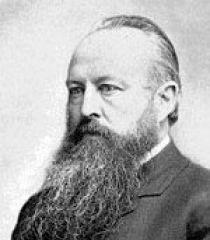
Lord Acton

Lord Acton Quotes

Author

Filter quotes by topic

Famous Lord Acton Quotes

“It was from America that the plain ideas that men ought to mind their business, and that the nation is responsible to Heaven for the acts of the State, - ideas long locked in the breast of solitary thinkers, and hidden among Latin folios, - burst forth like a conqueror upon the world they were destined to transform, under the title of the Rights of Man... and the principle gained ground, that a nation can never abandon its fate to an authority it cannot control.”

“The true guide of our conduct is no outward authority, but the voice of God, who comes down to dwell in our souls, who knows all our thoughts, to whom are owing all the truth we know, and all the good we do; for vice is voluntary, and virtue comes from the grace of the heavenly spirit within.”

“The epoch of doubt and transition during which the Greeks passed from the dim fancies of mythology to the fierce light of science was the age of Pericles, and the endeavour to substitute certain truth for the prescriptions of impaired authorities, which was then beginning to absorb the energies of the Greek intellect, is the grandest movement in the profane annals of mankind, for to it we owe, even after the immeasurable progress accomplished by Christianity, much of our philosophy and far the better part of the political knowledge we possess.”

“Power tends to corrupt, and absolute power corrupts absolutely.”

“Power tends to corrupt and absolute power corrupts absolutely. Great men are almost always bad men, even when they exercise influence and not authority: still more when you superadd the tendency or the certainty of corruption by authority.”

“Whenever a single definite object is made the supreme end of the State, be it the advantage of a class, the safety of the power of the country, the greatest happiness of the greatest number, or the support of any speculative idea, the State becomes for the time inevitably absolute. Liberty alone demands for its realization the limitation of the public authority, for liberty is the only object which benefits all alike, and provokes no sincere opposition.”