“Cease conceiving of education as mere preparation for later life, and make it the full meaning of the present life.”
Quote by John Dewey
Work
The Early Works, 1882-1898: 1893-1894. Early essays and The study of Ethics, a syllabus
This book compiles a selection of early essays and a comprehensive syllabus focusing on the study of ethics. The essays and syllabus were written during the period from 1882 to 1898, offering insights into the author's early philosophical and ethical perspectives. more
Author
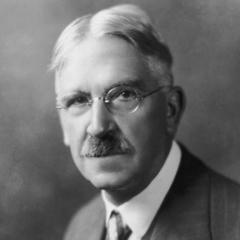
John Dewey
John Dewey was an American philosopher and educator, born on October 20, 1859, and died on June 1, 1952. He was a leading figure in the philosophy of pragmatism and had a profound impact on 20th-century education, philosophy, and the social sciences. more
You May Also Like
Source: The Later Works of John Dewey, Volume 1: 1925, Experience and Nature
“Expertness of taste is at once the result and reward of constant exercise of thinking.”
Source: The Later Works, 1925-1953: 1929
Source: The Middle Works, 1899-1924
Source: Reconstruction in Philosophy
“We never do anything well till we cease to think about the manner of doing it.”
Source: Sketches and Essays by W. H. Now first collected [and edited] by his son