Quotessence
Home / Quotes / Quote by Gian-Carlo Rota

Quote by Gian-Carlo Rota

“Combinatorics is an honest subject. No adèles, no sigma-algebras. You count balls in a box, and you either have the right number or you haven't. You get the feeling that the result you have discovered is forever, because it's concrete. Other branches of mathematics are not so clear-cut. Functional analysis of infinite-dimensional spaces is never fully convincing; you don't get a feeling of having done an honest day's work. Don't get the wrong idea - combinatorics is not just putting balls into boxes. Counting finite sets can be a highbrow undertaking, with sophisticated techniques.”

Quote by Gian-Carlo Rota

Author
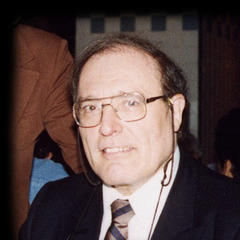
Gian-Carlo Rota
Gian-Carlo Rota

Gian-Carlo Rota was an Italian-American mathematician renowned for his contributions to combinatorics, algebraic geometry, and mathematical analysis. He served as a professor at MIT and Harvard University, and his research had a substantial impact on the advancement of these mathematical disciplines. more

You May Also Like

“We humans have a wide range of abilities that help us perceive and analyze mathematical content. We perceive abstract notions not just through seeing but also by hearing, by feeling, by our sense of body motion and position. Our geometric and spatial skills are highly trainable, just as in other high-performance activities. In mathematics we can use the modules of our minds in flexible ways - even metaphorically. A whole-mind approach to mathematical thinking is vastly more effective than the common approach that manipulates only symbols.”

“A mathematician who can only generalise is like a monkey who can only climb up a tree, and a mathematician who can only specialise is like a monkey who can only climb down a tree. In fact neither the up monkey nor the down monkey is a viable creature. A real monkey must find food and escape his enemies and so must be able to incessantly climb up and down. A real mathematician must be able to generalise and specialise.”

“The question you raise, 'How can such a formulation lead to computations?' doesn't bother me in the least! Throughout my whole life as a mathematician, the possibility of making explicit, elegant computations has always come out by itself, as a byproduct of a thorough conceptual understanding of what was going on. Thus I never bothered about whether what would come out would be suitable for this or that, but just tried to understand - and it always turned out that understanding was all that mattered.”