Quotessence
Home / Quotes / Quote by Johann Baptist Metz

Quote by Johann Baptist Metz

Work

Author

Johann Baptist Metz
Johann Baptist Metz

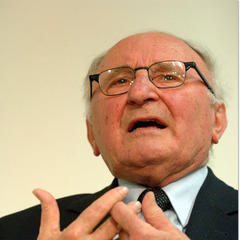
Limited information is available about Johann Baptist Metz, who was born on August 5, 1928, and whose profession is unknown. more

You May Also Like

“Our institutions are too big; they represent not the best but the worst characteristics of human beings. By submitting to huge hierarchies of power, we gain freedom from personal responsibility for what we do and are forced to do - the seduction of it - but we lose the dignity of being real men and women. Power corrupts; attracts the worst and corrupts the best. ... Refuse to participate in evil; insist on taking part in what is healthy, generous, and responsible. Stand up, speak out, and when necessary fight back. Get down off the fence and lend a hand, grab a-hold, be a citizen - not a subject.”

“Eric, you need to look at the whole picture," the PM said. "You look at the jobless as a huge pile of scrap and you're looking for what can be recycled. That's good. That's your job. But what you don't realise is that this pile of scrap itself serves a purpose. I need my zeros, Eric. They put fear in people; fear of crime and terrorism. They are a stark reminder to the stakeholders that what they despise today, they may end up joining tomorrow. It keeps them obedient. Remember that!”

“The novel should tell the truth, as I see the truth, or as the novelist persuades me to see it. And one more demand: I expect the novelist to aspire to improve the world. ... As a novelist, I want to be more than one more dog barking at the other dogs barking at me. Not out of any foolish hope that one novelist, or all virtuous novelists in chorus, can make much of a difference for good, except in the long run, but out of the need to prevent the human world from relaxing into something worse. To maintain the tension between truth and falsity, beauty and ugliness, good and evil. ... I believe the highest duty of the serious novelist is, whatever the means or technique, to be a critic of his society, to hold society to its own ideals, or if these ideals are unworthy, to suggest better ideals.”