Quotessence
Home / Quotes / Quote by John Henry Carver

Quote by John Henry Carver

“In the tail above the giant resonance, you can get not just one neutron emitted but two, three, four or five, and so there are a lot of things one can measure, looking at the competition with the emission of neutrons and protons and so on.”

Quote by John Henry Carver

Author
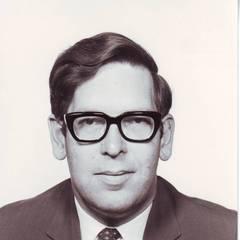
John Henry Carver
John Henry Carver

John Henry Carver was a significant figure in the field of [Occupation/Category]. Born on September 5, 1926, and passing away on December 25, 2004, Carver made notable contributions in his role as [Identity Position]. His life was marked by [Life Experience] and his achievements in [Achievements and Contributions] had a profound impact on [Impact and Evaluation]. more

You May Also Like

“Arthuriana has become a genre in itself, more like TV soap opera where people think they know the characters. All that's fair enough, but it does remove the mythic power of the feminine and masculine principles. So I prefer it in its original form, even if you have to wade through Mallory's 'Le Morte d'Arthur' - people smashing people for pages and pages! It still has the resonances of myth about it, which makes it work for me. I don't want to know if Mordred led an unhappy childhood or not.”

“I was raised in a reform synagogue. I think we all bring with us a sense of when hard things happen to us, we find ourselves asking questions of why are these things happening to me at this time in my life. I think in that sense, there's a certain resonance that I carry. It's more of a spiritual resonance as opposed to particularly of Judaism.”

“The line-by-line, sequential, continuous form of the printed page slowly began to lose its resonance as a metaphor of how knowledge was to be acquired and how the world was to be understood. "Knowing" the facts took on a new meaning, for it did not imply that one understood implications, background, or connections. Telegraphic discourse permitted no time for historical perspectives and gave no priority to the qualitative. To the telegraph, intelligence meant knowing of lots of things, not knowing about them.”

“I need a little language such as lovers use, words of one syllable such as children speak when they come into the room and find their mother sewing and pick up some scrap of bright wool, a feather, or a shred of chintz. I need a howl; a cry. When the storm crosses the marsh and sweeps over me where I lie in the ditch unregarded I need no words. Nothing neat. Nothing that comes down with all its feet on the floor. None of those resonances and lovely echoes that break and chime from nerve to nerve in our breasts making wild music, false phrases. I have done with phrases.”