Quotessence
Home / Quotes / Quote by Charles Proteus Steinmetz

Quote by Charles Proteus Steinmetz

“The scientist knows that the ultimate of everything is unknowable. No matter What subject you take, the current theory of it if carried to the ultimate becomes ridiculous. Time and space are excellent examples of this.”

Quote by Charles Proteus Steinmetz

Author
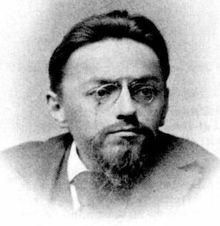
Charles Proteus Steinmetz

Charles Proteus Steinmetz, born on April 9, 1865, in Germany, and died on October 26, 1923, in the United States, was a prominent mathematician, electrical engineer, and inventor during the late 19th and early 20th centuries. He made significant contributions to the fields of electrical system analysis, motor design, and electrical engineering, often referred to as the 'Edison of the electrical field'. more

You May Also Like

“While the dogmatist is harmful, the sceptic is useless ...; one is certain of knowing, the other of not knowing. What philosophy should dissipate is certainty, whether of knowledge or of ignorance. Knowledge is not so precise a concept as is commonly thought. Instead of saying 'I know this', we ought to say 'I more or less know something more or less like this'. ... Knowledge in practical affairs has not the certainty or the precision of arithmetic.”

“It is difficult even to attach a precise meaning to the term "scientific truth." So different is the meaning of the word "truth" according to whether we are dealing with a fact of experience, a mathematical proposition or a scientific theory. "Religious truth" conveys nothing clear to me at all.”

“I can conceive few human states more enviable than that of the man to whom, panting in the foul laboratory, or watching for his life under the tropic forest, Isis shall for a moment lift her sacred veil, and show him, once and for ever, the thing he dreamed not of; some law, or even mere hint of a law, explaining one fact; but explaining with it a thousand more, connecting them all with each other and with the mighty whole, till order and meaning shoots through some old Chaos of scattered observations.”

“I have divers times examined the same matter (human semen) from a healthy man... not from a sick man... nor spoiled by keeping... for a long time and not liquefied after the lapse of some time... but immediately after ejaculation before six beats of the pulse had intervened; and I have seen so great a number of living animalcules... in it, that sometimes more than a thousand were moving about in an amount of material the size of a grain of sand... I saw this vast number of animalcules not all through the semen, but only in the liquid matter adhering to the thicker part.”

“The human mind prefers something which it can recognize to something for which it has no name, and, whereas thousands of persons carry field glasses to bring horses, ships, or steeples close to them, only a few carry even the simplest pocket microscope. Yet a small microscope will reveal wonders a thousand times more thrilling than anything which Alice saw behind the looking-glass.”

“You are literally filled with the fruit of your own devices, with rats and mice and such small deer, paramecia, and entomostraceæ, and kicking things with horrid names, which you see in microscopes at the Polytechnic, and rush home and call for brandy-without the water-stone, and gravel, and dyspepsia, and fragments of your own muscular tissue tinged with your own bile.”

“Descartes, the father of modern philosophy ... would never-so he assures us-have been led to construct his philosophy if he had had only one teacher, for then he would have believed what he had been told; but, finding that his professors disagreed with each other, he was forced to conclude that no existing doctrine was certain.”