“The inconsistency of the institution of domestic slavery with the principles of the Declaration of Independence was seen and lamented . . . no insincerity or hypocrisy can be fairly laid to their charge. Never from their lips was heard one syllable of attempt to justify the institution of slavery. They universally considered it as a reproach fastened upon them by the unnatural step-mother country and they saw that before the principles of the Declaration of Independence slavery, in common with every other mode of oppression, was destined sooner or later to be banished from the earth.”
Quote by John Quincy Adams
Author
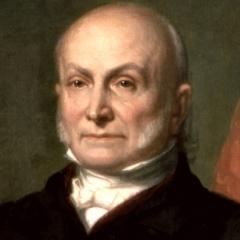
John Quincy Adams
John Quincy Adams was the 6th President of the United States, born on July 11, 1767, and died on February 28, 1848. He was a prominent statesman, diplomat, and scholar, known for his extensive knowledge and political experience. more
You May Also Like
Source: Abraham Lincoln: Speeches & Writings Part 1: 1832-1858: Library of America #45
“Slavery is ...an atrocious debasement of human nature.”
Source: The Works of Benjamin Franklin: Containing Several Political and Historical Tracts Not Included in Any Former Edition, and Many Letters, Official and Private, Not Hitherto Published; with Notes and a Life of the Author
Source: The Real Thomas Jefferson
Source: Early History of the University of Virginia: As Contained in the Letters of Thomas Jefferson and Joseph C. Cabell, Hitherto Unpublished; with an Appendix, Consisting of Mr. Jefferson's Bill for a Complete System of Education and Other Illustrative Documents; and an Introduction, Comprising a Brief Historical Sketch of the University, and a Biographical Notice of Joseph C. Cabell
Source: James Madison's