Quotessence
Home / Quotes / Quote by Ross Gelbspan

Quote by Ross Gelbspan

“The largest source of greenhouse gases in the coming decades will not be the US, Western Europe and Japan, but the developing economies of East Asia, Latin America and Eastern Europe. The coming eruption of carbon emissions from the poor world will dwarf any reductions in the North.”

Quote by Ross Gelbspan

Author
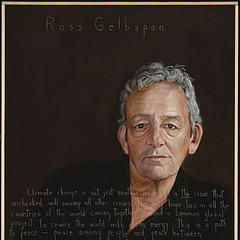
Ross Gelbspan
Ross Gelbspan

Ross Gelbspan is an American writer known for his in-depth reporting on environmental issues, particularly climate change and energy policy. His work focuses on the impact of the fossil fuel industry on the environment. more

You May Also Like

“The Aedes aegypti mosquito, which spreads dengue fever and yellow fever, has traditionally been unable to survive at altitudes higher than 1,000 meters because of colder temperatures there. But with recent warming trends, those mosquitoes have now been reported at 1,240 meters in Costa Rica and at 2,200 meters in Columbia. Malaria-bearing mosquitoes, too, have moved to higher elevations in central Africa, Asia, and parts of Latin America, triggering new outbreaks of the disease.”

“To restore our inflamed atmosphere to a hospitable state requires nothing less than rewiring the entire globe - and replace every oil-burning furnace, every gasoline-burning car, every coal-burning generating plant, with renewable, climate-friendly energy sources. The earth's fossil fuel resources have blessed us with a level of prosperity and abundance unimaginable a century ago. Today they are propelling us forward into a century of disintegration.”

“Each year we pump at least six billion tons of heat-trapping carbon into the innermost layer of our atmosphere, whose outer extent is only about twelve miles overhead. According to an IPCC (United Nations' Intergovernmental Panel on Climate Change) report released this year, atmospheric CO2 will, if the buildup is left unchecked, double from its pre-industrial level within the next century. That doubling of CO2 correlates with an increase in the global temperature of at least three to eight degrees Fahrenheit. The last ice age was just five to nine degrees colder than our current climate.”