Quotessence
Home / Quotes / Quote by Rumi

Quote by Rumi

“Be kind to yourself, dear - to our innocent follies. Forget any sounds or touch you knew that did not help you dance. You will come to see that all evolves us.”

Quote by Rumi

Author
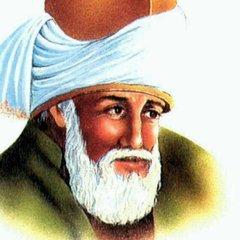
Rumi
Rumi

Rumi, also known as Jalal al-Din Rumi, was a 13th-century Persian poet and Sufi mystic. His poetry is renowned for its profound philosophy, beautiful language, and strong emotions, and has had a profound impact on the world. more

You May Also Like

“Some people find the experience and practice of compassion as a spiritual discipline to be a more direct route to the transformation of the heart than prayer. It is not that prayer does not or should not play a role in their lives, but their way to the opening of the heart lies through deeds of compassion. "Just do it" summarizes this path of transformation.”

“Compassion allows us to use our own pain and the pain of others as a vehicle for connection. This is a delicate and profound path. We may be adverse to seeing our own suffering because it tends to ignite a blaze of self-blame and regret. And we may be adverse to seeing suffering in others because we find it unbearable or distasteful, or we find it threatening to our own happiness. All of these possible reactions to the suffering in the word make us want to turn away from life.”

“In contrast, compassion manifests in us as the offering of kindness rather than withdrawal. Because compassion is a state of mind that is itself open, abundant and inclusive, it allows us to meet pain more directly. With direct seeing, we know that we are not alone in our suffering and that no one need feel alone when in pain. Seeing our oneness is the beginning of compassion, and it allows us to reach beyond aversion and separation.”

“We could say that compassion is the ultimate attitude of wealth: an anti-poverty attitude, a war on want. It contains all sorts of heroic, juicy, positive, visionary, expansive qualities. And it implies larger scale thinking, a freer and more expansive way of relating to yourself and the world.”

“At times I think the truest image of God today is a black inner-city grandmother in the United States or a mother of the disappeared in Argentina or the women who wake up early to make tortillas in refugee camps. They all weep for their children, and in their compassionate tears arises the political action that changes the world. The mothers show us that it is the experience of touching the pain of others that is the key to change.”