Quotessence
Home / Quotes / Quote by Carl Jung

Quote by Carl Jung

“At times I feel as if I am spread out over the landscape and inside things, and am myself living in every tree, in the plashing of the waves, in the clouds and the animals that come and go, in the procession of the seasons.”

Quote by Carl Jung

Work

Memories, dreams, reflections

This book is a compilation of the author's thoughts and experiences, offering insights into their life and perspectives. more

Author
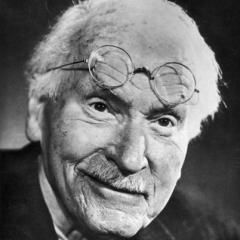
Carl Jung
Carl Jung

Carl Jung, born on July 26, 1875, and died on June 6, 1961, was a renowned Swiss psychiatrist and psychologist. His theories have had a profound impact on fields such as psychology, psychiatry, and religious studies. Jung proposed the theory of personality types, the concept of the collective unconscious, and founded analytical psychology. more

You May Also Like

“Thunder is no longer the voice of an angry god... No river contains a spirit... no snake the embodiment of wisdom, no mountain cave the home of a great demon. No voices now speak to man from stones, plants and animals, nor does he speak to them thinking they can hear. His contact with nature has gone, and with it has gone the profound emotional energy that this symbolic connection supplied.”

“I hold the view that the alchemist’s hope of conjuring out of matter the philosophical gold, or the panacea, or the wonderful stone, was only in part an illusion, an effect of projection; for the rest it corresponded to certain psychic facts that are of great importance in the psychology of the unconscious. As is shown by the texts and their symbolism, the alchemist projected what I have called the process of individuation into the phenomena of chemical change.”

“Dreams are impartial, spontaneous products of the unconscious psyche, outside the control of the will. They are pure nature; they show us the unvarnished, natural truth, and are therefore fitted, as nothing else is, to give us back an attitude that accords with our basic human nature when our consciousness has strayed too far from its foundations and run into an impasse.”

“It is only through the psyche that we can establish that God acts upon us, but we are unable to distinguish whether these actions emanate from God or from the unconscious. We cannot tell whether God and the unconscious are two different entities. Both are border-line concepts for transcendental contents. But empirically it can be established, with a sufficient degree of probability, that there is in the unconscious an archetype of wholeness.”