Quotessence
Home / Quotes / Quote by Daphne du Maurier

Quote by Daphne du Maurier

“I know that age, it's a particularly obstinate one, and a thousand bogies won't make you fear the future. A pity we can't change over.”

Quote by Daphne du Maurier

Book:Rebecca

Work

Rebecca

Daphne Du Maurier's 'Rebecca' is a psychological thriller that delves into the complex dynamics of a marriage. The story follows the new wife of Maxim de Winter, who must navigate the shadow of his first wife, the enigmatic and seemingly perfect Rebecca. Set against the backdrop of a grand English country house, the novel explores themes of jealousy, obsession, and the elusive nature of truth. more
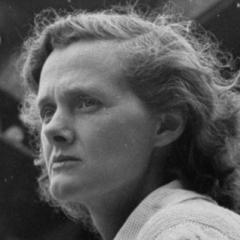
Author

Daphne du Maurier
Daphne du Maurier

British author known for her suspense novels and romantic stories. Daphne du Maurier's works are characterized by their mysterious and supernatural elements, with her most famous novels being 'Rebecca' and 'The Turn of the Screw'. Her writing style has had a profound impact on literature. more

You May Also Like

“I was young at Myna, that first time. When had the change come? He had retreated to here, to Collegium, to spin his awkward webs of intrigue and to lecture at the College. Then, years on, the call had come for action. He had gone to that chest in which he stored his youth and found that, like some armour long unworn, it had rusted away. He tried to tell himself that this was not like the grumbling of any other man who finds the prime of his life behind him. I need my youth and strength now, as never before. A shame that one could no husband time until one needed it. All his thoughts rang hollow. He was past his best and that was the thorn that would not be plucked from his side. He was no different from any tradesman or scholar who, during a life of indolence, pauses partway up the stairs to think, This was not so hard, yesterday.”

“The inference upon the whole is, that it is not from the value or worth of the object which any person pursues, that we can determine his enjoyment, but merely from the passion with which he pursues it, and the success which he meets with in his pursuit. Objects have absolutely no worth or value in themselves. They derive their worth merely from the passion. If that be strong and steady, and successful, the person is happy. It cannot reasonably be doubted, but a little miss, dressed in a new gown for a dancing-school ball, receives as complete enjoyment as the greatest orator, who triumphs in the splendour of his eloquence, while he governs the passions and resolutions of a numerous assembly. All the difference, therefore, between one man and another, with regard to life, consists either in the passion, or in the enjoyment: and these differences are sufficient to produce the wide extremes of happiness and misery.”