Quotessence
Home / Quotes / Quote by Edward Elgar

Quote by Edward Elgar

Author

Edward Elgar
Edward Elgar

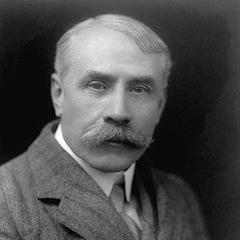
Edward Elgar, a British composer, was born on June 2, 1857, and died on February 23, 1934. He is renowned for his orchestral and choral works, particularly his 'Pomp and Circumstance March No. 1' and 'Enigma Variations'. Elgar's musical style was deeply influenced by the Romantic era, while also reflecting the British national character. more

You May Also Like

“If they think they are doing something new, they ought to do what I do every day - spend at least two hours every day listening to Johann Sebastian Bach and, man, it's all there. If they want to improvise around a theme,which is the essence of jazz, they should learn from the master. He never wastes a note, and he knows where every note is going and when to bring it back. Some of these cats go way out and forget where they began or what they started to do. Bach will clear it up for them.”

“A man's country is not a certain area of land, of mountains, rivers, and woods, but it is a principle and patriotism is loyalty to that principle.”

“Music for a long time has been telling what the world is like. What music has to say now, in a manner that has both logic and emotion in it, is that the world has a structure persons could like; be stronger by.... [If] the world is the oneness of opposites - and music says it is - the world is given an everlastingly sensible basis; for what could be more sensible that to be calm and forceful at once, reposeful and intense at once?”

“...we may be able to prove conclusively that all men are born with potentially brilliant intellects...and that the source of cultural creativity is the consciousness that springs from social cooperation and loving interaction...the majority of us live far below our potential, because of the oppressive nature of most societies.”

“We must ask why apparently general musical abilities should be restricted to a chosen few in societies supposed to be culturally more advanced. Does cultural development represent a real advance in human sensitivity, or is it chiefly a diversion for elites and a weapon of class exploitation?”