Quotessence
Home / Quotes / Quote by James E. Talmage

Quote by James E. Talmage

“We hear much nowadays as to the speculative ideas of men concerning the condition beyond the grave; but the admission that there is an individual existence beyond the grave, is a declaration that there must have been an individual, intelligent creation before we came here in the flesh. Life beyond the grave postulates a pre-existent state.”

Quote by James E. Talmage

Author
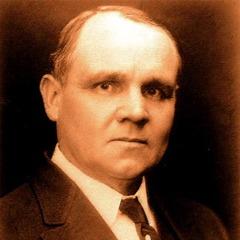
James E. Talmage
James E. Talmage

James E. Talmage was an individual of an unknown profession, born on September 21, 1862, and passed away on July 27, 1933. more

You May Also Like

“The inlet of a man's mind is what he learns; the outlet is what he accomplishes. If his mind is not fed by a continued supply of new ideas which he puts to work with purpose, and if there is no outlet in action, his mind becomes stagnant. Such a mind is a danger to the individual who owns it and is useless to the community.”

“The flight from study and awareness is much too common in a world that throws too many confusing pictures to the individual. For the sake of our democracy, based on freedom and individualism, we have to bring ourselves back to study again and again. Otherwise, we can become easy victims of a well-planned verbal attack on our minds and our consciences.”

“But if we believe what we profess concerning the worth of the individual, then the idea of individual development within a framework of ethical purpose must become our deepest concern, our national preoccupation, our passion, our obsession. We must think of education as relevant for everyone everywhere - at all ages and in all conditions of life.”

“When one gives whatever one can without restraint, the barriers of individuality break down. It no longer becomes possible to tell whether it is the student offering himself to the teacher, or the teacher offering herself to the student. One sees only two immaculate beings, reflecting one another like a pair of brilliant mirrors.”

“The individual who cultivates grievances, and who is perpetually exacting explanations of his assumed wrongs, can only be ignored, and left to the education of time and of development.... One does not argue or contend with the foul miasma that settles over stagnant water; one leaves it and climbs to a higher region, where the air is pure and the sunshine fair.”