“The essence of good manners consists in making it clear that one has no wish to hurt. When it is clearly necessary to hurt, it must be done in such a way as to make it evident that the necessity is felt to be regrettable.”
Quote by Bertrand Russell
Work
Mortals and Others, Volume II: American Essays 1931-1935
This volume compiles a selection of essays written during the early 1930s, exploring various themes and perspectives on American life and culture during that period. more
Author
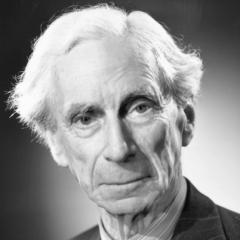
Bertrand Russell
Bertrand Russell was a British philosopher, mathematician, and logician born on May 18, 1872, and died on February 2, 1970. He is known for his contributions to logic and mathematics, particularly in the fields of mathematical logic and philosophical analysis. His works spanned a wide range of subjects, including ethics, political philosophy, history, and literary criticism. more
You May Also Like
Source: Mortals and Others
“Mystery is delightful, but unscientific, since it depends upon ignorance.”
Source: The Analysis of Mind
“Facts have to be discovered by observation, not by reasoning”
Source: History of Western Philosophy: Collectors Edition
Source: Human Society in Ethics and Politics
Source: The Selected Letters of Bertrand Russell: The private years, 1884-1914
Source: The Autobiography of Bertrand Russell: 1872-1914
Source: Autobiography
Source: Proposed Roads to Freedom
Source: Mysticism and Logic
Source: Why I Am Not a Christian