“In the broad light of day mathematicians check their equations and their proofs, leaving no stone unturned in their search for rigour. But, at night, under the full moon, they dream, they float among the stars and wonder at the miracle of the heavens. They are inspired. Without dreams there is no art, no mathematics, no life.”
Quote by Michael Atiyah
Work
Michael Atiyah Collected Works: 2002-2013
The Michael Atiyah Collected Works: 2002-2013 is a comprehensive compilation of mathematical papers and lectures by Michael Atiyah, a prominent figure in the mathematics community. The volume encompasses a variety of subjects within mathematics, reflecting Atiyah's extensive research and scholarly activities during the specified time period. more
Author
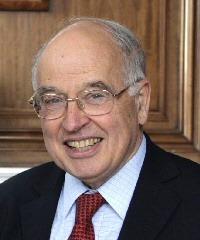
Michael Atiyah
Michael Atiyah, born on April 22, 1929, is a renowned mathematician from the United Kingdom. He has made significant contributions to various fields of mathematics, particularly in topology, geometry, and mathematical physics. Atiyah is known for his research in K-theory, index theorems, and geometric analysis. more
You May Also Like
“Mathematics is a collection of cheap tricks and dirty jokes.”
Source: What's Math Got to Do with It?: How Teachers and Parents Can Transform Mathematics Learning and Inspire Success
“My special pleasure in mathematics rested particularly on its purely speculative part.”
“The explorer is the person who is lost.”
Source: Jaguars ripped my flesh: adventure is a risky business