Quotessence
Home / Quotes / Quote by Norman Cousins

Quote by Norman Cousins

“Suppose I stopped taking aspirin and phenylbutazone? What about the pain? The bones in my spine and practically every joint in my body felt as though I had been run over by a truck. I knew that pain could be affected by attitudes. Most people become panicky about almost any pain. On all sides they have been so bombarded with advertisements about pain that they take this or that analgesic at the slightest sign of an ache. We are largely illiterate about pain and so are seldom able to deal with it rationally. Pain is part of the body's magic. It is the way the body transmits a sign to the body that something is wrong.”

Quote by Norman Cousins

Work

Anatomy of an Illness: As Perceived by the Patient

Browse quotes and source details for this work. more

Author
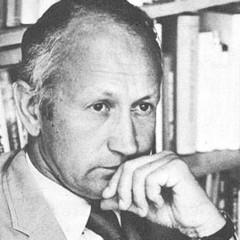
Norman Cousins
Norman Cousins

Norman Cousins was an American journalist, author, and professor. He is renowned for his role as a journalist and his promotion of laughter as a therapeutic method. Born on June 24, 1915, Cousins passed away on November 30, 1990. more

You May Also Like

“Illness is always an interaction between [mind and body]. It can begin in the mind and affect the body, or it can begin in the body and affect the mind, both of which are served by the same bloodstream. Attempts to treat most mental diseases as though they were completely free of physical causes and attempts to treat most bodily diseases as though the mind were in no way involved must be considered archaic in the light of new evidence about the way the human body functions.”

“Appearing nude on film was not easy when I was twenty-six in Body Heat; it was even harder when I was forty-six in The Graduate, on the stage, which is more up close and personal than film. After my middle-age nude scene, though, I unexpectedly got letters from women saying, "I have not undressed in front of my husband in ten years and I'm going to tonight." Or, "I have not looked in the mirror at my body and you gave me permission." These affirmations from other women were especially touching to me because when I began The Graduate I'd just come through a period when I felt a great loss of confidence, when my rheumatoid arthritis hit me hard and I literally couldn't walk or do any of the things that I was so used to doing. It used to be that if I said to my body, "Leap across the room now," it would leap instantly. I don't know how I did it, but I did it. I hadn't realized how much my confidence was based on my physicality. On my ability to make my body do whatever I wanted it to do. I was so consumed, not just by thinking about what I could and couldn't do, but also by handling the pain, the continual, chronic pain. I didn't realize how pain colored my whole world and how depressive it was. Before I was finally able to control my RA with proper medications, I truly had thought that my attractiveness and my ability to be attractive to men was gone, was lost. So for me to come back and do The Graduate was an affirmation to myself. I had my body back. I was back.”

“Time is the one thing that patients need most from their doctors--time to be heard, time to have things explained, time to reassured, time to be introduced by the doctor personally to specialists or other attendants whose very existence seems to reflect something new and threatening. yet the one thing that too many doctors find most difficult to command or manage is time.”

“But no matter what my eyes report, there is beauty that lives under the skin, under the surface, under the standards set up for me by outside arbiters of what is good and true. Those arbiters are not always so reliable. They can be bought and sold. They can be marketed and manufactured. The real standards, the ones set forth by the One who made me, are solid, knitted into me at my beginning. This beauty is true and real, and it lives within the heart. It is my heart that must be trained to recognize this beauty.”