Quotessence
Home / Quotes / Quote by Raj Patel

Quote by Raj Patel

“The food shortages and high prices have certainly sparked the world media's attention, particularly since they're coming in such diverse places, being everywhere from Haiti, to Senegal, to Bangladesh, to Egypt - a range of countries. That sort of caught the media off guard, and serves the media's prurient interests insofar as "it bleeds, and so it leads".”

Quote by Raj Patel

Author
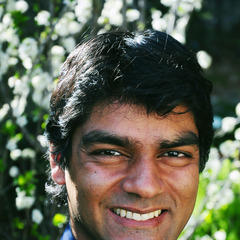
Raj Patel
Raj Patel

Raj Patel is a renowned journalist born in 1972. He is known for his in-depth investigative reporting and his focus on global inequality issues. more

You May Also Like

“All of human history is about the going from sudden fat years to the sudden lean years. We've always had good times and bad, and we've had ways of managing the bad times. We have ways of insulating ourselves, making ourselves less sensitive for the bad times by having things like grain stores, for example. Pretty much every civilization that's lasted for any reasonable length of time has some food management principles behind it. But what's been happening over the past thirty years is it's failed - the insurance policy.”

“Exporters monitor economic and political policies to the developing world, but the consequences of that have been to make developing countries far more sensitive to the constant fluctuations. Developing countries are not always allowed to support their farmers in the same way as the U.S. or Europe is. They're not allowed to have tariff barriers. They're forced, more or less, to shrink their social programs. The very poorest people have fewer and fewer entitlements. The consequence of this has been that there's been a chronic increase in the vulnerability of those economies to price shocks.”

“When you have weird policy decisions in the United States that then ripple out throughout the world, the rest of the world really takes it on the chin. When the U.S. decides to set their corn on fire rather than to eat it, which is what the biofuels policy basically is - then that drives up the price of corn. It drives up the price of substitutes. And all of a sudden you have a sort of spiral of food prices. And other countries don't have the resources, because they're not allowed to, to weather the storm.”

“We kind of know that food is necessary to survive. But our ways of connecting with food have been, in many ways, taken over by capitalism - certainly taken over by the influence large corporations have on the way that we eat and the way that we think about food. That's why kids these days are more prepared to take nutritional advice from Ronald McDonald than they are from their parents or their teachers or from scientists. And particularly in urban areas, you'll see kids who honestly believe tomatoes come from the supermarket rather than from a plant.”

“A recent review of different agricultural options for the future was conducted by a panel of experts. The scientists posed the question: How are we going to feed the world when there are nine billion people on it, as there will be by 2050? And the answer they came up with was industrial agriculture won't work and genetic engineering won't work and the solution is going to be sustainable, and going to ecological kinds of farming that are based on local environmental conditions that work with local ecosystems available to develop a richer kind of farming technology.”

“By the end of the 1960s, the United States owned more than half of the Indian rupee money supply, and that had been acquired through food aid. So I think it's very interesting to see the very long history of how sovereignty and food go together. When some countries remove another country's ability to feed itself, it is a very powerful tool. Imperialist countries, like the United Kingdom, like the United States, have used it for centuries.”

“I do think we have a food problem. In 2006, which is the year for which we have the latest data, 35.5 million Americans were food insecure. That means there are 35.5 million Americans who are so hard up at some point during the year that they didn't know where their next meal was coming from. That's a lot of Americans. They don't get reported very much because there's nothing spectacular about people skipping a meal because they're poor. The media tends to ignore that, just as it ignores the sort of chronic food shortages elsewhere in the world.”

“Right now you're seeing more and more families reporting that they are skipping meals. They're having to give up meat. Mothers are foregoing food so their kids can have something. People are growing their own vegetables, not because they've gone organic, but because it's one of the few assured sources of food they have. For low-income Americans food is costly right now. The price of food has been going up, and wages haven't. This puts working Americans in a real bind. The fact that the mainstream media hasn't reported it doesn't mean that it's not happening.”