“I admit that these terms and the diagrams connected with them repel some readers, and fill others with the vain imagination that they have mastered difficult economics problems, when really they have done little more than learn the language in which parts of those problems can be expressed, and the machinery by which they can be handled. When the actual conditions of particular problems have not been studied, such knowledge is little better than a derrick for sinking oil-wells erected where there are no oil-bearing strata.”
Quote by Alfred Marshall
Author
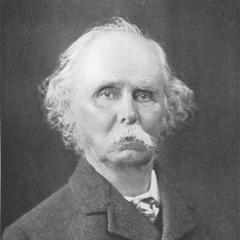
Alfred Marshall
Alfred Marshall was a British economist born on July 26, 1842, and died on July 13, 1924. He is one of the most influential economists of the late 19th and early 20th centuries and is considered one of the founders of neoclassical economics. more
You May Also Like
Source: Karl Marx and Frederick Engels: Selected Correspondence, [1843-1895].
Source: Autobiography of John Stuart Mill
“If economists did not concern themselves with economic efficiency, nobody would.”
“Obviousness is always the enemy of correctness.”
Source: Mysticism and Logic and Other Essays: Top Philosophy Collections
Source: Paul Samuelson on the History of Economic Analysis: Selected Essays