Quotessence
Home / Quotes / Quote by Russ Feingold

Quote by Russ Feingold

Author

Russ Feingold
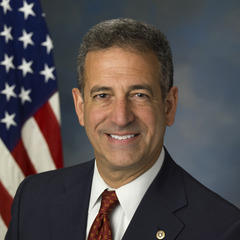
Russ Feingold

Russ Feingold is a former U.S. Senator from Wisconsin, born on March 2, 1953. He served as a U.S. Senator from Wisconsin from 1993 to 2011, known for his strong moral stance and advocacy for democratic reform. more

You May Also Like

“[H]ow do I pity those who (assuming the name of friends) surround themselves with maxims importing the wisdom of doubt and suspicion, 'til they impose on themselves that very hard task of laboring through life without ever knowing a human creature to whom they can make the proper use of language and freely speak the dictates of their hearts!”

“There is yet another kind of matrimonial dialect (which naturally succeeds this of talking at each other), which may very properlybe styled The Language Contradictory.... In the former, however plain the object of satire may be exhibited to the whole company, yet there always remains some little covering.... But in this last method, the defiance becomes more open and the impetuosity with which these contradictions are uttered (although the subjects of them are often of the most indifferent nature) evidently prove that they arise from passion.”

“I know not whether it would be too bold an assertion to say that candor makes capacity.... But in order to try the truth of any observation relating to the mind, the easiest method is to illustrate it by outward objects. If, for instance, a man was to sweat and labor all the days of his life to fill a chest which was already full, the absurdity of his vain endeavor would be glaring. In the same manner, when the human mind is filled and stuffed with notions brought thither by fallacious inclinations, there is no room for truth to enter: candor being banished, passions alone bear the sway.”

“Thoroughly to unfold the labyrinths of the human mind is an arduous task.... In order to dive into those recesses and lay them open to the reader in a striking and intelligible manner, 'tis necessary to assume a certain freedom in writing, not strictly perhaps within the limits prescribed by rules.”

“Men look on knowledge which they learn--or might learn--from others as they do on the most beautiful structures which are not their own: in outward objects, they would rather behold their own hogsty than their neighbor's palace; and in mental ones, would prefer one grain of knowledge gained by their own observation to all the wisdom of a thousand Solomons.”