“Ask any rich man of common prudence to which of the two sorts of people he has lent the greater part of his stock, to those who, he thinks, will employ it profitably, or to those who will spend it idly, and he will laugh at you for proposing the question.”
Quote by Adam Smith
Work
An Inquiry Into the Nature and Causes of the Wealth of Nations With a Life of the Author: Also a View of the Doctrine of Smith, Compared with that of the French Economists, with a Method of Facilitating the Study of His Works, from the French of M. Jariner
An Inquiry Into the Nature and Causes of the Wealth of Nations is a foundational work in the field of economics, authored by Adam Smith. This book includes a detailed biography of Smith, offering insights into his life and influences. It provides a comparative study of Smith's economic theories with those of French economists, highlighting the differences and similarities. The text also includes a French translation by M. Jariner, which is intended to make Smith's works more accessible to readers. more
Author
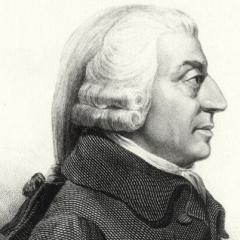
Adam Smith
Adam Smith, a renowned philosopher and economist from Britain, was born on June 5, 1723, and died on July 17, 1790. Known as the father of modern economics, his work 'The Wealth of Nations' had a profound impact on the development of economics. more
You May Also Like
Source: An Inquiry Into the Principles and Policy of the Government of the United States
Source: Speeches in the convention to amend the constitution of Massachusetts ; Speeches in Congress
Source: Speeches and Forensic Arguments
“Power naturally and necessarily follows property.”
Source: Speeches and Forensic Arguments
Source: Mindset StackingTM Inspirational Journal VolumeSS02
Source: The Great Speeches and Orations of Daniel Webster
Source: Speeches and Forensic Arguments
Source: The Railroad Builders: A Chronicle of the Welding of the States