Quotessence
Home / Quotes / Quote by Richard Dawkins

Quote by Richard Dawkins

“The whole point of religious faith, its strength and chief glory, is that it does not depend on rational justification. The rest of us are expected to defend our prejudices. But ask a religious person to justify their faith and you infringe 'religious liberty'.”

Quote by Richard Dawkins

Work

The God Delusion

This book delves into the arguments for and against the existence of a deity, exploring scientific evidence, historical context, and philosophical reasoning. The author critically analyzes various religious beliefs and their implications on society and science. more

Author

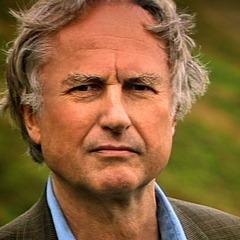
Richard Dawkins
Richard Dawkins

Richard Dawkins is a British ethologist, writer, and thinker, known for his contributions to evolutionary theory, particularly in the field of modern synthesis. He is widely recognized for his best-selling book 'The Selfish Gene', which explains the central role of genes in biological evolution. Dawkins has made significant impacts in the field of science communication and has sparked widespread discussions about human behavior and morality. more

You May Also Like

“Most thoughtful people would agree that morality in the absence of policing is somehow more truly moral than the kind of false morality that vanishes as soon as the police go on strike or the spy camera is switched off, whether the spy camera is a real one monitored in the police station or an imaginary one in heaven.”

“Does religion fill a much needed gap? It is often said that there is a God-shaped gap in the brain which needs to be filled: we have a psychological need for God -- imaginary friend, father, big brother, confessor, confidant -- and the need has to be satisfied whether God really exists or not. But could it be that God clutters up a gap that we'd be better off filling with something else? Science, perhaps? Art? Human friendship? Humanism? Love of this life in the real world, giving no credence to other lives beyond the grave?”

“Sticks and stones may break my bones, but words can never hurt me." The adage is true as long as you don't really believe the words. But if your whole upbringing, and everything you have ever been told by parents, teachers and priests, has led you to believe, really believe, utterly and completely, that sinners burn in hell (or some other obnoxious article of doctrine such as that a woman is the property of her husband), it is entirely plausible that words could have a more long-lasting and damaging effect than deeds.”

“Whether we ever get to know about them or not, there are very probably alien civilizations that are superhuman, to the point of being god-like in ways that exceed anything a theologian could possibly imagine. Their technical achievements would seem as supernatural to us as ours would seem to a Dark Age peasant transported to the twenty-first century. Imagine his response to a laptop computer, a mobile telephone, a hydrogen bomb or a jumbo jet.”

“Science may be weird and incomprehensible--more weird and less comprehensible than any theology--but science works. It gets results. It can fly you to Saturn, slingshotting you around Venus and Jupiter on the way. We may not understand quantum theory (heaven knows, I don't), but a theory that predicts the real world to ten decimal places cannot in any straightforward sense be wrong.”

“An intelligent couple can read their Darwin and know that the ultimate reason for their sexual urges is procreation. They know that the woman cannot conceive because she is on the pill. Yet they find that their sexual desire is in no way diminished by the knowledge. Sexual desire is sexual desire and its force, in an individual's psychology, is independent of the ultimate Darwinian pressure that drove it. It is a strong urge which exists independently of its ultimate rationale.”

“Christianity, just as much as Islam, teaches children that unquestioned faith is a virtue. You don't have to make the case for what you believe. If somebody announces that it is part of his faith, the rest of society, whether of the same faith, or another, or of none, is obliged, by ingrained custom, to "respect" it without question; respect it until the day it manifests itself in a horrible massacre like the destruction of the World Trade Center, or the London or Madrid bombings.”

“I would, like any other scientist, willingly change my mind if the evidence led me to do so. So I care about what's true, I care about evidence, I care about evidence as the reason for knowing what is true. It is true that I come across rather passionate sometimes - and that's because I am passionate about the truth... I do get very impatient with humbug, with cant, with fakery, with charlatans.”