Quotessence
Home / Quotes / Quote by Larry Kramer

Quote by Larry Kramer

“I belong to a culture that includes Proust, Henry James, Tchaikovsky, Cole Porter, Plato, Socrates, Aristotle, Alexander the Great, Michelangelo, Leonardo da Vinci, Christopher Marlowe, Walt Whitman, Herman Melville, Tennessee Williams, Byron, E.M. Forster, Lorca, Auden, Francis Bacon, James Baldwin, Harry Stack Sullivan, John Maynard Keynes, Dag Hammarskjold… These are not invisible men. Poor Bruce. Poor frightened Bruce. Once upon a time you wanted to be a soldier. Bruce, did you know that an openly gay Englishman was as responsible as any man for winning the Second World War? His name was Alan Turing and he cracked the Germans' Enigma code so the Allies knew in advance what the Nazis were going to do — and when the war was over he committed suicide he was so hounded for being gay. Why don't they teach any of this in the schools? If they did, maybe he wouldn't have killed himself and maybe you wouldn't be so terrified of who you are. The only way we'll have real pride is when we demand recognition of a culture that isn't just sexual. It's all there—all through history we've been there; but we have to claim it, and identify who was in it, and articulate what's in our minds and hearts and all our creative contributions to this earth. And until we do that, and until we organize ourselves block by neighborhood by city by state into a united visible community that fights back, we're doomed. That's how I want to be defined: as one of the men who fought the war.”

Quote by Larry Kramer

Work

The Normal Heart

Browse quotes and source details for this work. more

Author
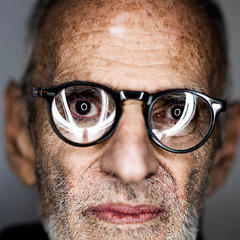
Larry Kramer
Larry Kramer

Larry Kramer is an influential American playwright, born on June 25, 1935. Known for his sharp social commentary and profound character development, Kramer's works primarily focus on the lives and struggles of the LGBTQ+ community. His masterpieces include 'The Normal Heart' and 'The Boys in the Band', which have had a profound impact on the LGBTQ+ rights movement. more

You May Also Like

“My goal in going public was not to put my extended family to shame, or to get back at Brian for abusing my sister and me; rather, my mission was to give a face and voice to an epidemic that society stays hushed about.”

“Incest, rape and abuse is rampant everywhere, even in our churches, but society is silent. It is a silent epidemic. One in three women will experience a sexual assault in her lifetime and one in six males, yet we don't speak of it, even in our churches!”

“We have a genuine and devastating epidemic of opiate abuse in this country, and it is of critical importance that this problem be addressed. But we must do so in a way that doesn’t cut off an effective (and often the only) treatment for the chronically ill, many of whom are able to function in this world at all only because of the small respite that responsible opiate use provides.”

“The Prophet (ﷺ) married Aisha when she was young, developed the capabilities she had, and produced the most beautiful female personality: balanced, confident, strong, reliable, pious, satisfied, and truly guided. He equipped her with knowledge and whatever is necessary to develop a sound character from childhood. Allah gave her years to live after the Prophet (ﷺ) and she remained a beacon emanating knowledge to the world until the Day of Judgment.”

“The book argues that even though many cases have been held up as classic examples of modern American “witch hunts,” none of them fits that description. McMartin certainly comes close. But a careful examination of the evidence presented at trial demonstrates why, in my view, a reasonable juror could vote for conviction, as many did in this case. Other cases that have been painted as witch-hunts turn out to involve significant, even overwhelming, evidence of guilt. There are a few cases to the contrary, but even those are more complicated than the witch-hunt narrative allows. In short, there was not, by any reasonable measure, an epidemic of “witch hunts” in the 1980s. There were big mistakes made in how some cases were handled, particularly in the earliest years. But even in those years there were cases such as those of Frank Fuster and Kelly Michaels that, I believe, were based on substantial evidence but later unfairly maligned as having no evidentiary support.”

“Am I going to crave blood, raw steak, that kind of thing?” Gary asked, straight-faced. “Well, actually…” Savannah started. “I do not have rabies.” Gregori silenced her with a look. “I am not contagious.” “All the books say if you drink my blood, I get to drink your blood, and then I’m like you.” Gary sounded slightly disappointed. “Some people grow bat wings,” Savannah admitted, her teeth tugging at her lower lip. “That’s where Batman came from. And capes, all those swirling capes. A regular epidemic. It’s from our blood, a kind of allergic reaction. Don’t worry, you would be showing signs already if you were one of those with a problem.” “Is she always like this?” Gary asked Gregori. “She gets worse,” Gregori said truthfully.”