Quotessence
Home / Quotes / Quote by John Dryden

Quote by John Dryden

Work

The Poetical Works of John Dryden

This book includes a selection of John Dryden's poetry, showcasing his contributions to the English literary tradition during the Restoration period. more

Author
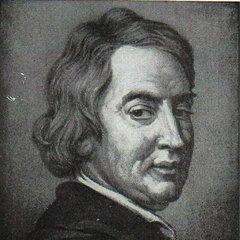
John Dryden
John Dryden

John Dryden, born on August 9, 1631, and died on May 12, 1700, was a prominent English poet and dramatist of the 17th century. His works have had a profound impact on English literature, particularly in the field of drama, and he is considered one of the founders of English drama. more

You May Also Like

“The transfinite numbers are in a certain sense themselves new irrationalities and in fact in my opinion the best method of defining the finite irrational numbers is wholly disimilar to, and I might even say in priciple the same as, my method described above of introducing trasfinite numbers. One can say unconditionally: the transfinite numbers stand or fall with the finite irrational numbers; they are like each other in their innermost being; for the former like the latter are definite delimited forms or modifications of the actual infinite.”

“What I assert and believe to have demonstrated in this and earlier works is that following the finite there is a transfinite (which one could also call the supra-finite), that is an unbounded ascending lader of definite modes, which by their nature are not finite but infinite, but which just like the finite can be determined by well-defined and distinguishable numbers.”

“Well, part of it is a longstanding belief - it's been in our education establishment at least since the 1930s - that somehow children should be allowed to discover knowledge for themselves, that they should construct their own knowledge. This has surfaced most recently in connection with mathematics instruction, where the idea is that they need to discover how to add for themselves. Rather than being taught how to add, they should construct this knowledge on their own.”

“The rainbow is such a remarkable phenomenon of nature, and its cause has been so meticulously sought after by inquiring minds throughout the ages, that I could not choose a more appropriate subject for demonstrating how, with the method I am using, we can arrive at knowledge not possessed at all by those whose writings are available to us.”

“It has been said that the three great develpments in twentieth century science are relativity, quantum mechanics, and chaos. That strikes me the same as saying that the three great developments in twentith century engineering are the airplane, the computer, and the pop-top aluminum can. Chaos and fractals are not even twentieth century ideas: chaos was first observed by Poincare and fractals were familiar to Cantor a century ago, although neither man had the computer at his disposal to show the rest of the world the beauty he was seeing.”