Quotessence
Home / Quotes / Quote by James Harrington

Quote by James Harrington

“No man can be a politician, except he be first a historian or a traveller; for except he can see what must be, or what may be, he is no politician.”

Quote by James Harrington

Author
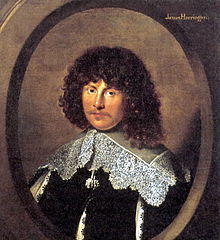
James Harrington
James Harrington

James Harrington (January 3, 1611 - September 11, 1677) was a prominent British political philosopher, historian, and writer of the 17th century, best known for his work 'Oceana'. more

You May Also Like

“Sexuality is primarily a means of communicating with other people, a way of talking to them, of expressing our feelings about ourselves and them. It is essentially a language, a body language, in which one can express gentleness and affection, anger and resentment, superiority and dependence far more succinctly than would be possible verbally, where expressions are unavoidably abstract and often clumsy.”

“The difference between the Japanese and the American is summed up in their opposite reactions to the proverb (popular in both nations), "A rolling stone gathers no moss." Epidemiologist S. Leonard Syme observes that to the Japanese, moss is exquisite and valued; a stone is enhanced by moss; hence a person who keeps moving and changing never acquires the beauty and benefits of stability. To Americans, the proverb is an admonition to keep rolling, to keep from being covered with clinging attachments.”

“What we have here is a rousing boy's adventure story, adapted from stories that Edgar Rice Burroughs cranked out for early pulp magazines. They lacked the visceral appeal of his Tarzan stories, which inspired an estimated 89 movies; amazingly, this is the first John Carter movie, but it is intended to foster a franchise and will probably succeed.”

“The silliness-much of which is clearly intentional-is blended with some genuine grandeur. The Pixar touch is evident in the precision of the visual detail and in the wit and energy of Michael Giacchino's score, but the quality control that has been exercised over this project also has a curiously undermining effect. The movie eagerly sells itself as semitrashy, almost-campy fun, but it is so lavish and fussy that you can't help thinking that it wants to be taken seriously, and therefore you laugh at, rather than with, its mock sublimity.”

“Painting dissolves the forms at its command, or tends to; it melts them into color. Drawing, on the other hand, goes about resolving forms, giving edge and essence to things. To see shapes clearly, one outlines them--whether on paper or in the mind. Therefore, Michelangelo, a profoundly cultivated man, called drawing the basis of all knowledge whatsoever.”