“Of publishing a book on religion, my dear sir, I never had an idea. I should as soon think of writing for the reformation of Bedlam, as of the world of religious sects. Of these there must be, at least, ten thousand, every individual of every one of which believes all wrong but his own.”
Quote by Thomas Jefferson
Work
Jefferson: Magnificent Populist
This book delves into the life and ideas of Thomas Jefferson, focusing on his contributions to the development of populism in the United States. It examines Jefferson's political thought, his influence on the nation's founding principles, and his impact on the political landscape of his time. more
Author
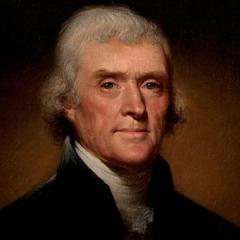
Thomas Jefferson
Thomas Jefferson was the third President of the United States, a distinguished politician, philosopher, architect, and scientist. He was born on April 13, 1743, and died on July 4, 1826. Jefferson advocated for democracy and freedom in politics and was one of the main authors of the Declaration of Independence. His political ideas had a profound impact on the founding and development of the United States. more
You May Also Like
Source: The Works of Thomas Jefferson: Correspondence and Papers, 1816-1826
Source: Letters
“I do not speak for my church on public matters; and the church does not speak for me.”
“I think there's a great beauty to having problems. That's one of the ways we learn.”
“... the Athenian lawmaker Solon decreed it a crime for any citizen to shrink from controversy.”
Source: History of the rise and influence of the spirit of rationalism in Europe
Source: History of the rise and influence of the spirit of rationalism in Europe
Source: History of the rise and influence of the spirit of rationalism in Europe