Quotessence
Home / Quotes / Quote by Victor Hugo

Quote by Victor Hugo

Work

Les Misérables

Victor Hugo's 'Les Misérables' is an epic narrative that delves into the lives of various characters, including Jean Valjean, a former convict seeking redemption, and Fantine, a woman struggling in poverty. The story is rich in historical detail and moral complexity, offering a profound examination of society's flaws and the resilience of the human spirit. more
Author

Victor Hugo
Victor Hugo

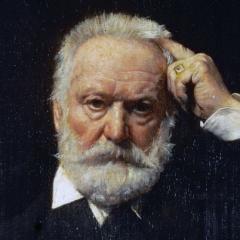
Victor Hugo, a French romantic poet, novelist, and playwright, was born on February 26, 1802, and died on May 22, 1885. He is considered one of the greatest writers in French literary history, known for his profound humanistic concerns and rich imagination. more

You May Also Like

“Every nation that has ended in tyranny has come to that end by way of good order. It certainly does not follow from this that peoples should scorn public peace, but neither should they be satisfied with that and nothing more. A nation that asks nothing of government but the maintenance of order is already a slave in the depths of its heart; it is a slave of its well-being, ready for the man who will put it in chains.”

“It is above all in the present democratic age that the true friends of liberty and human grandeur must remain constantly vigilant and ready to prevent the social power from lightly sacrificing the particular rights of a few individuals to the general execution of its designs. In such times there is no citizen so obscure that it is not very dangerous to allow him to be oppressed, and there are no individual rights so unimportant that they can be sacrificed to arbitrariness with impunity.”

“To love is to suffer. To avoid suffering one must not love. But then one suffers from not loving. Therefore, to love is to suffer; not to love is to suffer; to suffer is to suffer. To be happy is to love. To be happy, then, is to suffer, but suffering makes one unhappy. Therefore, to be happy one must love or love to suffer or suffer from too much happiness.”

“What good does it do me, after all, if an ever-watchful authority keeps an eye out to ensure that my pleasures will be tranquil and races ahead of me to ward off all danger, sparing me the need even to think about such things, if that authority, even as it removes the smallest thorns from my path, is also absolute master of my liberty and my life; if it monopolizes vitality and existence to such a degree that when it languishes, everything around it must also languish; when it sleeps, everything must also sleep; and when it dies, everything must also perish?”