“Because we hold it for 'a fundamental and undeniable truth', that religion or 'the duty which we owe to our Creator' and the manner of discharging it, can be directed only by reason and conviction, not by force or violence.”
Quote by James Madison
Work
The Writings of James Madison: 1783-1787
The Writings of James Madison: 1783-1787 is a compilation of the personal and political correspondence, essays, and speeches of James Madison during a pivotal period in American history. It offers insights into Madison's role in the drafting of the United States Constitution and his early political thought, providing a detailed look at the formation of the nation's foundational documents. more
Author
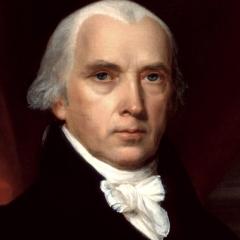
James Madison
James Madison, the 4th President of the United States, was born on March 16, 1751, and died on June 28, 1836. He was a key figure in drafting the U.S. Constitution and had a profound impact on the political system of the United States. more
You May Also Like
Source: A memorial and remonstrance, on the religious rights of man; written in 1784-5, at the request of the religious society of Baptists in Virginia. ...
“The Constitution of the U.S. forbids everything like an establishment of a national religion.”
“Enlightened statesmen will not always be at the helm.”
Source: The Federalist, on the New Constitution, Written in the Year 1788, by Mr. Hamilton, Mr. Madison, and Mr. Jay: with an Appendix, Containing the Letters of Pacificus and Helvidius, on the Proclamation of Neutrality of 1793; Also, the Original Articles of Confederation, and the Constitution of the United States, with the Amendments Made Thereto
Source: Time Flies
Source: The Federalist, on the New Constitution, Written in the Year 1788
Source: 1816-1828
Source: James Madison's
Source: 1769-1793