Quotessence
Home / Quotes / Quote by Edward Gibbon

Quote by Edward Gibbon

“The distinctions of personal merit and influence, so conspicuous in a republic, so feeble and obscure under a monarchy, were abolished by the despotism of the emperors; who substituted in their room a severe subordination of rank and office, from the titled slaves who were seated on the steps of the throne, to the meanest instruments of arbitrary power.”

Quote by Edward Gibbon

Work

The Decline and Fall of the Roman Empire (Edited and Abridged): Abridged Edition

This book is a seminal work in the field of history, offering a detailed account of the decline and fall of the Roman Empire. The abridged edition presents the key events and insights from Edward Gibbon's original work, making it accessible to modern readers. more

Author
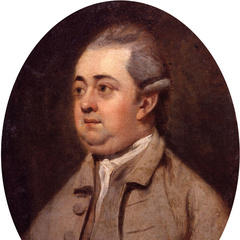
Edward Gibbon
Edward Gibbon

Edward Gibbon was an English historian renowned for his magnum opus, 'The History of the Decline and Fall of the Roman Empire'. His work has had a profound impact on historical studies. more

You May Also Like

“The philosopher, who with calm suspicion examines the dreams and omens, the miracles and prodigies, of profane or even of ecclesiastical history, will probably conclude that, if the eyes of the spectators have sometimes been deceived by fraud, the understanding of the readers has much more frequently been insulted by fiction.”

“The awful mysteries of the Christian faith and worship were concealed from the eyes of strangers, and even of catechumens, with an affected secrecy, which served to excite their wonder and curiosity.”

“But the severe rules of discipline which the prudence of the bishops had instituted were relaxed by the same prudence in favour of an Imperial proselyte, whom it was so important to allure, by every gentle condescension, into the pale of the church; and Constantine was permitted, at least by a tacit dispensation, to enjoy most of the privileges, before he had contracted any of the obligations, of a Christian.”

“An absolute monarch, who is rich without patrimony, may be charitable without merit; and Constantine too easily believed that he should purchase the favour of Heaven if he maintained the idle at the expense of the industrious, and distributed among the saints the wealth of the republic.”

“The grateful applause of the clergy has consecrated the memory of a prince, who indulged their passions and promoted their interest. Constantine gave them security, wealth, honours, and revenge; and the support of the orthodox faith was considered as the most sacred and important duty of the civil magistrate. The edict of Milan, the great charter of toleration, had confirmed to each individual of the Roman world the privilege of choosing and professing his own religion.”

“But this inestimable privilege was soon violated: with the knowledge of truth the emperor imbibed the maxims of persecution; and the sects which dissented from the catholic church were afflicted and oppressed by the triumph of Christianity. Constantine easily believed that the heretics, who presumed to dispute his opinions or to oppose his commands, were guilty of the most absurd and criminal obstinacy; and that a seasonable application of moderate severities might save those unhappy men from the danger of an everlasting condemnation.”

“Where the subject lies so far beyond our reach, the difference between the highest and the lowest of human understandings may indeed be calculated as infinitely small; yet the degree of weakness may perhaps be measured by the degree of obstinacy and dogmatic confidence.”

“If the emperor had capriciously decreed the death of the most eminent and virtuous citizen of the republic, the cruel order would have been executed without hesitation by the ministers of open violence or of specious injustice. The caution, the delay, the difficulty with which he proceeded in the condemnation and punishment of a popular bishop, discovered to the world that the privileges of the church had already revived a sense of order and freedom in the Roman government.”

“Corruption, the most infallible symptom of constitutional liberty, was successfully practised; honours, gifts, and immunities were offered and accepted as the price of an episcopal vote; and the condemnation of the Alexandrian primate was artfully represented as the only measure which could restore the peace and union of the catholic church.”