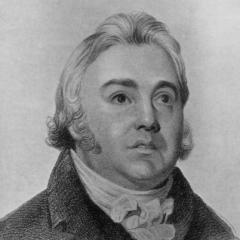
“Thou rising Sun! thou blue rejoicing Sky!
Yea! every thing that is and will be free!
Bear witness for me, whereso'er ye be,
With what deep worship I have still adored
The spirit of divinest Liberty.”
Quote by Samuel Taylor Coleridge
“O lady! we receive but what we give And in our life alone does Nature live.”
“You talk about making this article cheaper by reducing its price in the market from 8 d. to 6 d. But suppose, in so doing, you have rendered your country weaker against a foreign foe; suppose you have demoralized thousands of your fellow-countrymen, and have sown discontent between one class of society and another, your article is tolerably dear, I take it, after all.”
Source: Specimens of the table talk
“I have often been surprised that Mathematics, the quintessence of Truth, should have found admirers so few and so languid. Frequent consideration and minute scrutiny have at length unravelled the cause: viz . that though Reason is feasted, Imagination is starved; whilst Reason is luxuriating in its proper Paradise, Imagination is wearily travelling on a dreary desert.”
Source: The Complete Works of Samuel Taylor Coleridge: Poetry, Plays, Literary Essays, Lectures, Autobiography and Letters (Classic Illustrated Edition): The Entire Opus of the English poet, literary critic and philosopher, including The Rime of the Ancient Mariner, Kubla Khan, Christabel, Lyrical Ballads, Conversation Poems and Biographia Literaria
“Nature is a wary wily long-breathed old Witch, tough-lived as a Turtle and divisible as the Polyp, repullulative in a thousand Snips and Cuttings, integra et in toto! She is sure to get the better of Lady MIND in the long run, and to take her revenge too transforms our To Day into a Canvass dead-colored to receive the dull featureless Portait of Yesterday.”
Source: Opus Maximum
“Joy rises in me, like a summer's morn.”
Source: The Complete Works of Samuel Taylor Coleridge: With an Introductory Essay Upon His Philosophical and Theological Opinions
“In philosophy equally as in poetry it is the highest and most useful prerogative of genius to produce the strongest impressions of novelty, while it rescues admitted truths from the neglect caused by the very circumstance of their universal admission.”
Source: The Complete Works of Samuel Taylor Coleridge: Poetry, Plays, Literary Essays, Lectures, Autobiography and Letters (Classic Illustrated Edition): The Entire Opus of the English poet, literary critic and philosopher, including The Rime of the Ancient Mariner, Kubla Khan, Christabel, Lyrical Ballads, Conversation Poems and Biographia Literaria
“Never pursue literature as a trade.”
Source: Biographia Literaria; Or, Biographical Sketches of My Literary Life and Opinions
“The myriad-minded man, our, and all men's, Shakespeare, has in this piece presented us with a legitimate farce in exactest consonance with the philosophical principles and character of farce, as distinguished from comedy and from entertainments. A proper farce is mainly distinguished from comedy by the licence allowed, and even required, in the fable, in order to produce strange and laughable situations. The story need not be probable, it is enough that it is possible.”
Source: Shakespeare, With Introductory Matter on Poetry, The Drama, and The Stage by S.T. Coleridge: Coleridge’s Essays and Lectures on Shakespeare and Other Old Poets and Dramatists
“The principle of the Gothic architecture is infinity made imaginable. It is no doubt a sublimer effort of genius than the Greek style; but then it depends much more on execution for its effect.”
Source: Specimens of the Table Talk of Samuel Taylor Coleridge
“How many of our virtues originate in the fear of Death & that while we flatter ourselves that we are melting in Christian Sensibility over the sorrows of our human Brethren and Sisteren, we are in fact, tho' perhaps unconsciously, moved at the prospect of our own End for who sincerely pities Sea-sickness, Toothache, or a fit of the Gout in a lusty Good-liver of 50?”
Source: Collected Letters: 1820-1825