Quotessence
Home / Quotes / Quote by Laurel Clark

Quote by Laurel Clark

“Other than motherhood, the eight years that I spent at the University of Wisconsin, Madison, I have incredibly fond memories of. It's a beautiful place, with four seasons up in Wisconsin. And really wonderful people.”

Quote by Laurel Clark

Author
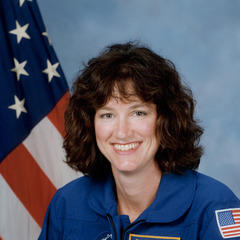
Laurel Clark
Laurel Clark

Laurel Clark, born on March 10, 1961, was an American medical doctor and astronaut. She joined NASA in 1992 and became the first female physician astronaut in NASA's history. In 1997, as a crew member of STS-87, she contributed to the construction of the International Space Station. Tragically, she and her six fellow astronauts perished on February 1, 2003, during the STS-107 mission. more

You May Also Like

“All things are made of atoms - little particles that move around in perpetual motion, attracting each other when they are a little distance apart, but repelling upon being squeezed into one another. In that one sentence, you will see, there is an enormous amount of information about the world, if just a little imagination and thinking are applied.”

“Any one who has studied the history of science knows that almost every great step therein has been made by the "anticipation of Nature," that is, by the invention of hypotheses, which, though verifiable, often had very little foundation to start with; and, not unfrequently, in spite of a long career of usefulness, turned out to be wholly erroneous in the long run.”

“At first he who invented any art that went beyond the common perceptions of man was naturally admired by men, not only because there was something useful in the inventions, but because he was thought wise and superior to the rest. But as more arts were invented, and some were directed to the necessities of life, others to its recreation, the inventors of the latter were always regarded as wiser than the inventors of the former, because their branches of knowledge did not aim at utility.”

“But science is the great instrument of social change, all the greater because its object is not change but knowledge, and its silent appropriation of this dominant function, amid the din of political and religious strife, is the most vital of all the revolutions which have marked the development of modern civilisation.”

“But the greatest error of all the rest is the mistaking or misplacing of the last or farthest end of knowledge: for men have entered into a desire of learning and knowledge, sometimes upon a natural curiosity and inquisitive appetite; sometimes to entertain their minds with variety and delight; sometimes for ornament and reputation; and sometimes to enable them to victory of wit and contradiction; and most times for lucre and profession; and seldom sincerely to give a true account of their gift of reason, to the benefit and use of men.”

“By profession a biologist, [Thomas Henry Huxley] covered in fact the whole field of the exact sciences, and then bulged through its four fences. Absolutely nothing was uninteresting to him. His curiosity ranged from music to theology and from philosophy to history. He didn't simply know something about everything; he knew a great deal about everything.”