“May [our Declaration of Independence] be to the world, what I believe it will be (to some parts sooner, to others later, but finally to all), the signal of arousing men to burst the chains under which monkish ignorance and superstition had persuaded them to bind themselves, and to assume the blessings and security of self-government... All eyes are opened, or opening, to the rights of man.”
Quote by Thomas Jefferson
Work
Thomas Jefferson: selections from his writings edited, with an introduction
Thomas Jefferson: selections from his writings is a curated collection that includes a variety of Jefferson's works, spanning his political, philosophical, and personal musings. The book is edited by an individual whose name is not provided, and it includes an introductory section that likely sets the context for the reader. The selection of writings is intended to provide insight into Jefferson's intellectual contributions and his role in shaping American history. more
Author
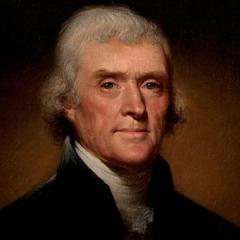
Thomas Jefferson
Thomas Jefferson was the third President of the United States, a distinguished politician, philosopher, architect, and scientist. He was born on April 13, 1743, and died on July 4, 1826. Jefferson advocated for democracy and freedom in politics and was one of the main authors of the Declaration of Independence. His political ideas had a profound impact on the founding and development of the United States. more
You May Also Like
Source: The Writings of Thomas Jefferson: Correspondence, cont
Source: Black Looks: Race and Representation
Source: The Essential Gilbert K. Chesterton
“In fact, not forgiving is like drinking rat poison and then waiting for the rat to die.”
Source: Traveling Mercies: Some Thoughts on Faith
“Alcohol is probably one of the greatest things to arrive upon the earth - alongside of me.”
Source: Sunlight Here I Am: Interviews and Encounters, 1963-1993