Quotessence
Home / Quotes / Quote by Immanuel Wallerstein

Quote by Immanuel Wallerstein

Work

Capistalist Civilisation

This book delves into the intricacies of a civilization driven by capitalist principles, examining its economic structures, social dynamics, and the impact of capitalism on various aspects of life within this civilization. more

Author
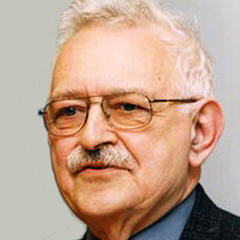
Immanuel Wallerstein

Immanuel Wallerstein is a renowned American sociologist known for his contributions to world-systems theory. His research focuses on globalization and international relations, profoundly influencing the understanding of the modern world order. more

You May Also Like

“On the one hand, there has been a remarkable expansion of the total production and productivity of food production, and on the other hand an extraordinarily skewed distribution system, substituting medium-run threats for short-term threats for the majority of the world's population, particularly the 50 to 80 percent at the bottom.”

“Wars between states and people seem to have existed under all historical systems for as long as we have some recorded evidence. War is quite clearly not a phenomenon particular to the modern world-system. On the other hand, once again the technological achievements of capitalist civilization serve as much ill as good. One bomb in Hiroshima killed more people than whole wars in pre-modern times. Alexander the Great in his whole sweep of the Middle East could not compare in destructiveness to the impact of the Gulf War on Iraq and Kuwait.”

“The basic question that the 'new science' raises for our balance sheet is the issue of what scientific questions have not been asked for 500 years, which scientific risks have not been pursued. It raises the question of who has decided what scientific risks were worth taking, and what have been the consequences in terms of the power structures of the world.”

“What is different in capitalist civilization has been two things. First, the process of meritocracy has been proclaimed as an official virtue instead of being merely a de facto reality. The culture has been different. And secondly, the percentage of the world's population for whom such ascent was possible has gone up. But even though it has grown up, meritocratic ascent remains very much the attribute of a minority.”

“It seems to me the only pertinent question is: cui bono? It is clear that the size of the privileged strata as a percentage of the whole has grown significantly under historical capitalism. And for these people, the world they know is better on the whole than any their earlier counterparts knew.”

“For the other end of the spectrum, the 50 to 85 percent of the world's population who are not the recipients of privilege, the world they know is almost certainly worse than any their earlier counterparts knew. It is likely they are worse off materially, despite the technological changes. In substantive as opposed to formal terms, they are more, not less, subject to arbitrary constraints, since the central mechanisms are more pervasive and more efficient. And they bear the brunt of the various kinds of psychic malaise, as well as of the destructiveness of civil wars.”

“If we return to the two faces of individualism - individualism as the spur of energy, initiative, and imagination; and individualism as the limitless struggle of all against all - it can be seen how the two practices emerge from and limit the extend of the disequilibrating impact of the contradiction involved in the geocultural agenda.”