Quotessence
Home / Quotes / Quote by Nicolas de Caritat, marquis de Condorcet

Quote by Nicolas de Caritat, marquis de Condorcet

“If it is possible to have a linear unit that depends on no other quantity, it would seem natural to prefer it. Moreover, a mensural unit taken from the earth itself offers another advantage, that of being perfectly analogous to all the real measurements that in ordinary usage are also made upon the earth, such as the distance between two places or the area of some tract, for example. It is far more natural in practice to refer geographical distances to a quadrant of a great circle than to the length of a pendulum.”

Quote by Nicolas de Caritat, marquis de Condorcet

Author
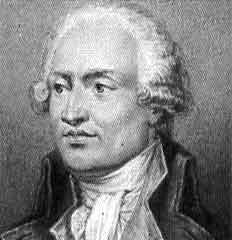
Nicolas de Caritat, marquis de Condorcet

Nicolas de Caritat, Marquis de Condorcet, was a prominent French philosopher, mathematician, and Enlightenment thinker of the 18th century. He advocated for rationalism, freedom, equality, and love, and had a profound impact on the French Revolution. more

You May Also Like

“To achieve world government, it is necessary to remove from the minds of men, their individualism, loyalty to family traditions, national patriotism and religious dogmas.”

“The true patriot scrutinizes the actions of his own government with unceasing vigilance. And when his government violates the morality and rightness associated with principles of individual freedom and private property, he immediately rises in opposition to his government.”

“Even the Savior of the world, the Only Begotten Son of God, was obliged to come to earth and to take upon himself an earthly tabernacle. He experienced joy and sorrow, happiness and grief, lasting satisfaction and frequent disappointments. As Paul has written, "Though he were a Son yet learned he obedience by the things which he suffered; and being made perfect, he became the author of eternal salvation unto all them that obey him."”

“John declared that "Christ received not of the fulness at the first," but that he "continued from grace to grace until he received a fulnesss and thus he was called the Son of God, because he received not of the fulness at the first." Thus is it with us all. We must work out our salvation and exaltation by coming to this earth. Man must be born into mortality and live and die that he may continue in his progress toward eternal life and exaltation.”

“It is by far the most elegant worship, hardly excepting the Greek mythology. What with incense, pictures, statues, altars, shrines, relics, and the real presence, confession, absolution, - there is something sensible to grasp at. Besides, it leaves no possibility of doubt; for those who swallow their Deity, really and truly, in transubstantiation, can hardly find any thing else otherwise than easy of digestion.”

“Deep practice is built on a paradox: struggling in certain targeted ways-operating at the edges of your ability, where you make mistakes-makes you smarter. Or to put it in a slightly different way, experiences where you're forced to slow down, make errors, and correct them-as you would if you were walking up an ice-covered hill, slipping and stumbling as you go-end up making you swift and graceful without your realizing it.”