Quotessence
Home / Quotes / Quote by Philip K. Dick

Quote by Philip K. Dick

“But what does it matter?" Verne said. "The rules and codes were artificial. They were good only as long as they could be enforced. Now there's no one to enforce them. So they don't have any meaning. They were just conventions. Don't confuse them with innate moral laws. They were just rules, nothing more. Man made. They came, now they're gone again. The yuks will have their own rules.”

Quote by Philip K. Dick

Work

Gather yourselves together

Browse quotes and source details for this work. more

Author
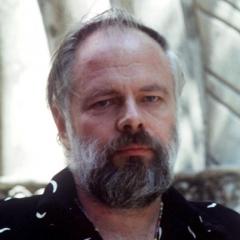
Philip K. Dick
Philip K. Dick

Philip K. Dick was an American science fiction novelist known for his unique philosophical thinking and profound futuristic imagination. His works often explore the boundaries between individuals and society, reality and illusion, and have had a profound impact on science fiction literature. more

You May Also Like

“I do not believe that there is anything inherently and unavoidably ugly about industrialism. A factory or even a gasworks is not obliged of its own nature to be ugly, any more than a palace or a dog-kennel or a cathedral. . . . But in any case, though the ugliness of industrialism is the most obvious thing about it and the thing every newcomer exclaims against, I doubt whether it is centrally important. And perhaps it is not even desirable, industrialism being what it is, that it should learn to disguise itself as something else. As Mr Aldous Huxley has truly remarked, a dark Satanic mill ought to look like a dark Satanic mill and not like the temple of mysterious and splendid gods. Moreover, even in the worst of the industrial towns one sees a great deal that is not ugly in the narrow aesthetic sense. A belching chimney or a stinking slum is repulsive chiefly because it implies warped lives and ailing children. Look at it from a purely aesthetic standpoint and it may have a certain macabre appeal. I find that anything outrageously strange generally ends by fascinating me even when I abominate it.”

“I visited a manufactory in Manchester with my father. I saw that the wretched creatures enslaved to the machines were as repetitive in their movements as machines. They were distinguished only by their unhappiness. The great wealth of the manufactories is not for the workers but for the owners. Humans must live in misery to be the mind of the machines.”

“As I rode back to Detroit, a vision of Henry Ford's industrial empire kept passing before my eyes. In my ears, I heard the wonderful symphony which came from his factories where metals were shaped into tools for men's service. It was a new music, waiting for the composer with genius enough to give it communicable form. I thought of the millions of different men by whose combined labor and thought automobiles were produced, from the miners who dug the iron ore out of the earth to the railroad men and teamsters who brought the finished machines to the consumer, so that man, space, and time might be conquered, and ever-expanding victories be won against death.”

“Since 1963, LEGO bricks have been manufactured from acrylonitrile-butadiene-styrene copolymer - ABS copolymer for short - a plastic with a matte finish. It is very hard and robust - import criteria for a children's toy. Laboratories in Switzerland and Denmark regularly test the quality of the ABS. The plastic is distributed to factories as granules rather than in liquid form. These grains of plastic are heated up to 232ºC and converted into a molten mass. Injection moulding machines weighing up to 150 tonnes squeeze the viscous plastic mass into the desired injection moulds - of which there are 2,400 varieties. After seven seconds, the brick produced in this way has cooled down enough to be removed from the mould. The injection moulding method is so precise that out of every million elements produced, only about 18 units have to be rejected. Unsold bricks are converted back into granulates and recycled.”

“Sometimes the smoke from the factories and riverboats and trains would obscure the night sky entirely. But the town's industrial breath was blowing somewhere else tonight, and so the Armstrong house was bathed in starlight. Nell studied the little white specks, like glittering dust on black velvet, and she asked, "You boys ever wonder what it'd be like to be somewhere else?”