Quotessence
Home / Quotes / Quote by Pope Paul VI

Quote by Pope Paul VI

“To love can mean 'to love oneself,' and often love is no more than a juxtaposition of two solitudes.”

Quote by Pope Paul VI

Author
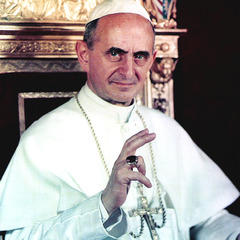
Pope Paul VI
Pope Paul VI

Pope Paul VI, born Giuseppe Montini, was the 262nd Pope of the Roman Catholic Church, serving from 1963 to 1978. His pontificate witnessed several significant reforms, including the implementation of the Second Vatican Council. more

You May Also Like

“Se nu er jeg borte fra byens larm og trængsel og aviser og mennesker, jeg er flygtet fra det altsammen fordi det igjen kaldte på mig fra landet og ensomheten hvor jeg er fra. Du skal se det kommer til å gå godt! Tænker jeg og har atter det bedste håp. Ak jeg har gjort en slik flugt før og er atter vendt tilbake til byen. Og atter flyktet.”

“A society coming apart at top and bottom, or passing over into another form, contains just as many possibilities for revelation as a society running along smoothly in its own rut. The individual is thrust out of the sheltered nest that society has provided. He can no longer hide his nakedness by the old disguises. he learns how much of what he has taken for granted was by its own nature neither eternal nor necessary but thoroughly temporal and contingent. He learns that the solitude of the self is an irreducible dimension of human life no matter how completely that self had seemed to be contained in its social milieu. In the end, he sees each man as solitary and unsheltered before his own death. Admittedly, these are painful truths, but the most basic things are always learned with pain, since our inertia and complacent love of comfort prevent us from learning them until they are forced upon us. It appears that man is willing to learn about himself only after some disaster; after war, economic crisis, and political upheaval have taught him how flimsy is that human world in which he thought himself so securely grounded. What he learns has always been there, lying concealed beneath the surface of even the best-functioning societies; it is no less true for having come out of a period of chaos and disaster. But so long as man does not have to face up to such a truth, he will not do so.”

“She has always said that talking makes everyone feel better. He says talking is the equivalent of grooming. The tongue and fingers are governed by the same parts of the brain. He marvels at how close they can be some nights on the phone and how words really are the equal of touch. Bakelite pressed hard against his ear. She says it's not just the freedom from him and from their daughter. I feel some sort of opening. I saw things so clearly today. He thinks about the solitary figure in every religion, the monks, saints and shamans in every tradition who walk out into wilderness on their own and find revelation. It's what solitude does to a social animal he says. People talk of recognizing something greater than themselves when they're alone because we finally have to realize how helpless we are as individuals. There's a freedom, a sense of wonder in feeling for a moment that we don't have to please anyone or adjust to the needs of others. And there's a fear in realizing how small we are, how much those distant others normally insulate us from seeing the limits of our mostly incompetent bodies. When we're on our own we seek solutions and speculate and fictionalize because that's what we do when we're confronted with survival. That's revelation. Maybe she says, I'm just saying I'd like to eat less meat. We could have fish.”