Quotessence
Home / Quotes / Quote by Paulo Freire

Quote by Paulo Freire

“When men [sic] avoid encounter they become inflexible and treat others as mere objects; instead of nurturing life they kill life; instead of searching for life, they flee from it. And these are oppressor characteristics.”

Quote by Paulo Freire

Work

Pedagogy of the Oppressed

Browse quotes and source details for this work. more

Author
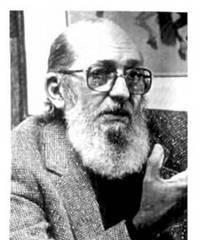
Paulo Freire
Paulo Freire

Brazilian educator, born on September 19, 1921, and died on May 2, 1997. Paulo Freire is renowned for his critical pedagogy theories and contributions to adult education. more

You May Also Like

“Ich habe viel Zeit in den Kellergewölben verbracht, nicht aus Überdruß an der Sonne oder plein air, ich verlor nur die Kontrolle über die Stunden und über das Leben, wenn ich mich so ausdrücken darf; ich verzichtete auf jene starren Definitionen des täglichen Lebens, die es erlauben, der natürlichen Wärme zu folgen oder einfach von der Sonne und den Elementen abzuhängen; ich lag oder ich stand aufrecht, oder ich lehnte nur an einer Wand in diesen feuchten Zimmern, den Schlafsälen meiner Ware, die emsig hin und her ging, die Blicke nach oben, zu den Gittern gerichtet. Zwischen Spaten, Trophäen und Splittern im Marmorabfall stehen die tönernen Gäste, die Schlingen knüpfen aus Schlaf, als wären es Mechelner Spitzen, sie segeln über die Wände, springen wir Kautschuk auf die Stufen aus Staub, steigen nach oben, zum Licht, sie steigen umsonst, gelangen zu nichts, nicht einmal zur Seligkeit oder zur Erschöpfung der Verzweiflung. Und wie in den Märchen kehrte ich nach oben zurück, schwer an Jahren.”

“All of the sudden it dawned them, they now were strangers in their own city. A city all of the sudden separated by the relentless force of nature—the body of water that now stood as an insurmountable barrier between them and the other side. Truly divided. There was no denying it; no words could capture the magnitude of this division, the impossibility of reaching across.”

“I am examining the inaccurate claiming of “abuse” as a substitute for problem-solving. I make plain how this deflection of responsibility produces unnecessary separation and perpetuates anxiety while producing cruelty, shunning, undeserved punishment, incarceration, and occupation.”

“False accusations of harm are used to avoid acknowledgment of complicity in creating conflict and instead escalate normative conflict to the level of crisis. This choice to punish rather than resolve is a product of distorted thinking, and relies on reinforcement of negative group relationships, when instead these ideolo- gies should be actively challenged. Through this over-statement of harm, false accusations are used to justify cruelty, while shunning keeps information from entering into the process. Resistance to shunning, exclusion, and unilateral control, while necessary, are mischaracterized as harm and used to re-justify more escalation towards bullying, state intervention, and violence. Emphasizing communication and repair, instead of shunning and separation, is the key to transforming these paradigms.”

“[To speak more particularly at last of lovers] their situation allowed them to consider their feelings with a sort of feverish objectivity, and it was rare, at such times, for them not to see their own shortcomings clearly. The first occasion of this was the difficulty they had in imagining precisely the absent person's actions and gestures. They deplored the fact that they knew nothing about how their loved ones spent their time; they felt guilty about their past failure to find this out and about having pretended to believe that, for a person in love, the beloved's actions are not the source of every joy. From then on it was easy for them to go back through the story of their love and to examine its imperfections. In normal times we are aware, consciously or not, that there is no love that cannot be surpassed, yet we accept with a greater or lesser degree of equanimity that ours shall remain merely average. But memory is more demanding.”