Quotessence
Home / Quotes / Quote by Diana Gabaldon

Quote by Diana Gabaldon

“Amphora,” he murmured against the wide, sweet curve of her lips. His hands slid over the wide, sweet curve of her hips, cupping smoothness cool and solid, timeless and graceful as the swell of ancient pottery, promising abundance. “Like a Grecian vase. God, you’ve got the most beautiful arse!” “Jug-butt, huh?”

Quote by Diana Gabaldon

Work

Drums of Autumn

This book is a historical fiction that delves into the personal and societal challenges faced by a family amidst the backdrop of significant historical events. The narrative explores themes of loyalty, survival, and the impact of historical changes on individual lives. more

Author

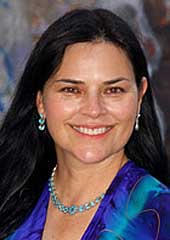
Diana Gabaldon
Diana Gabaldon

Diana Gabaldon is a renowned American author, best known for her historical fantasy novel series 'Outlander'. Her works blend elements of history, love, adventure, and science fiction, captivating readers worldwide. more

You May Also Like

“John Calvin, brought characteristic rigor to the question. Luther dreamed of good princes, disliked law on principle, and had little interest in institutions. As a result, Lutheran churches ended up with a mishmash of governing structures. Calvin, by contrast, had trained as a lawyer, knew that structures matter, and favored more participatory government.”

“In sixteenth-century Geneva, Protestant theologian John Calvin spun a complex theological web around two simple threads: the absolute sovereignty of God and the total depravity of human beings. Like Calvinists, Muslims go to great lengths not to confuse Creator and created. Glorifying in the servility of human beings before Allah, they refer to themselves in many cases as "slaves" of the Almighty. But unlike Calvin, Muslims do not believe in original sin. Every human being is born with an inclination toward both God and the good. So sin is not the problem Islam addresses. Neither is there any need for salvation from sin. In Islam, the problem is self-sufficiency, the hubris of acting as if you can get along without God, who alone is self-sufficient. "The idol of yourself," writes the Sufi mystic Rumi, "is the mother of (all) idols." Replace this idol with submission to Allah, and what you have is the goal of Islam: a "soul at peace" (89:27) in this life and the next: Paradise.”

“Monastic spirituality concentrated on private disciplines, as if detaching oneself from "the world" (i.e. society) might make one holier. Anabaptist piety was similar in that regard. However, Calvin thought of sanctification as a family affair. How could one learn loving humility, patience, wisdom, and forgiveness in isolation from others?”

“...I begin with three features of Calvin's thought that highlight the preeminence of the church in his theology. First, Calvin asserted the right of the church to regulate its own discipline and government...Second, Calvin had a high view of the ministry of word and sacrament in the church...Third, Calvin in accord with his doctrine of the two kingdoms, identified the church alone with the spiritual kingdom of Christ”

“Such rich features of Calvin's ecclesiology highlight how his work of reform was in large respect a reform of ecclesiastical culture. One can only imagine how differently the citizen of Geneva must have experienced the church before and after its reformation. Under Calvin's vision, as implemented in Geneva, Christianity now entailed a very different kind of worship, a very different place of word and sacraments, a very different idea of ecclesiastical discipline, and a very different conception of ecclesiastical government. This was a reformed Christianity, and a reformed Christianity meant a reformed church.”