“[T]he mass-man sees in the State an anonymous power, and feeling himself, like it, anonymous, he believes that the State is something of his own. Suppose that in the public life of a country some difficulty, conflict, or problem presents itself, the mass-man will tend to demand that the State intervene immediately and undertake a solution directly with its immense and unassailable resources. This is the gravest danger that to-day threatens civilisation: State intervention; the absorption of all spontaneous social effort by the State.”
Quote by Jose Ortega y Gasset
Work
the Revolt of the Masses
This book delves into the dynamics of mass movements, examining their origins, motivations, and consequences. It analyzes the role of the masses in shaping political landscapes and societal transformations, offering insights into the complexities of collective action and its effects on the fabric of society. more
Author
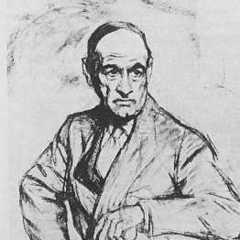
Jose Ortega y Gasset
Jose Ortega y Gasset was a Spanish philosopher born on May 9, 1883, and died on October 18, 1955. He is known for his work in the philosophy of knowledge and culture, and for his analysis of the nature of man and society. more
You May Also Like
Source: the Revolt of the Masses
“Whether he be an original or a plagiarist, man is the novelist of himself.”