Quotessence
Home / Quotes / Quote by Zbigniew Brzezinski

Quote by Zbigniew Brzezinski

“Persisting social crisis, the emergence of a charismatic personality, and the exploitation of mass media to obtain public confidence would be the steppingstones in the piecemeal transformation of the United States into a highly controlled society.”

Quote by Zbigniew Brzezinski

Author
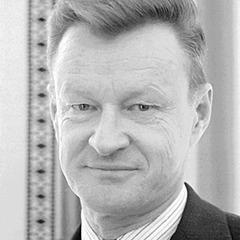
Zbigniew Brzezinski
Zbigniew Brzezinski

Zbigniew Brzezinski was a Polish-American political scientist and diplomat who served as the United States National Security Advisor under President Jimmy Carter from 1977 to 1981. He is known for his influential role in shaping U.S. foreign policy during the Cold War and his advocacy for a multi-polar world. more

You May Also Like

“Because when you kill 300 people, 400 people, who have nothing to do with the provocations Hezbollah staged, but you do it in effect deliberately by being indifferent to the scale of collateral damage, you're killing hostages in the hope of intimidating those that you want to intimidate. And more likely than not you will not intimidate them. You'll simply outrage them and make them into permanent enemies with the number of such enemies increasing.”

“To put it in a terminology that hearkens back to the more brutal age of ancient empires, the three grand imperatives of imperial geo-strategy are to prevent collusion and maintain security dependence among the vassals, to keep tributaries pliant and protected, and to keep the barbarians from coming together.”

“More directly linked to the impact of technology, it involves the gradual appearance of a more controlled and directed society. Such a society would be dominated by an elite whose claim to political power would rest on allegedly superior scientific know-how. Unhindered by the restraints of traditional liberal values, this elite would not hesitate to achieve its political ends by using the latest modern techniques for influencing public behavior and keeping society under close surveillance and control.”

“The primary objective of copyright is not to reward the labor of authors, but ‘[t]o promote the Progress of Science and useful Arts.' To this end, copyright assures authors the right to their original expression, but encourages others to build freely upon the ideas and information conveyed by a work. This result is neither unfair nor unfortunate. It is the means by which copyright advances the progress of science and art.”