Quotessence
Home / Quotes / Quote by Thomas Cranmer

Quote by Thomas Cranmer

Work

The Remains of Thomas Cranmer

This book delves into the life of Thomas Cranmer, a key figure in the English Reformation, examining his contributions to the Church of England and the impact of his beliefs on the religious landscape of his time. more

Author
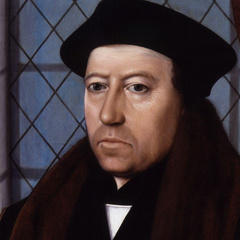
Thomas Cranmer
Thomas Cranmer

Thomas Cranmer, born on July 2, 1489, and died on March 21, 1556, was an English reformer, theologian, and bishop. He played a significant role in the English Reformation as the bishop of the Church of England, profoundly influencing the religious landscape of England. more

You May Also Like

“God's Word will never pass away, but looking back to the Old Testament and since the time of Christ, with tears we must say that because of lack of fortitude and faithfulness on the part of God's people, God's Word has many times been allowed to be bent, to conform to the surrounding, passing, changing culture of that moment rather than to stand as the inerrant Word of God judging the form of the world spirit and the surrounding culture of that moment. In the name of the Lord Jesus Christ, may our children and grandchildren not say that such can be said about us.”

“Once Mel Gibson revealed himself to be, like the president, a person of serious religious faith, the gloves came off. Mel Gibson has done a major favor for serious faith, both Jewish and Christian, in America. He has made it "cool" to be religious, but in so doing he has unleashed the hatred of secular America against himself personally, against his work and against his family. God bless him.”

“For the last 250 years or so, secularists have waited patiently for the fulfilment of their prediction that religion would die out in the next generation or two. But religious people have been singularly uncooperative, and new strategies have developed for controlling this blight on human progress. If religion won't "wither away" as philosopher Richard Rorty has wished, then perhaps it can be privatized and thereby removed from influence on public life‚ - sort of like localizing an outbreak of the plague.”