Quotessence
Home / Quotes / Quote by Tom Vilsack

Quote by Tom Vilsack

“I think the Iraqis themselves will have to make a determination as to what type of government they ultimately come up with and what kind of nation they ultimately come up with. But they can continually use America's troops presence. The problem is not going to change until they are confronted with the reality that they have to make decisions and they have to make them themselves. They have to decide whether they want a country, whether they're willing to put their lives on the line and sacrifice for a national interest as opposed to a regional or sectarian interest.”

Quote by Tom Vilsack

Author
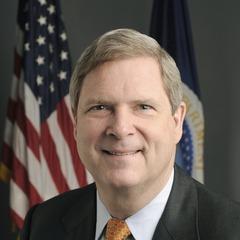
Tom Vilsack
Tom Vilsack

Tom Vilsack is a seasoned politician who served as the United States Secretary of Agriculture. Born on December 13, 1950, he has dedicated himself to promoting agricultural modernization and sustainability. During his tenure, he implemented several agricultural reform measures aimed at improving the living standards of farmers and enhancing the competitiveness of the agricultural industry. more

You May Also Like

“Most Chinese filmmakers grew up watching television; they watched films on television, not in cinemas. The scope of their vision is not big enough, they're not yet detail-oriented enough. You have to watch films in cinemas for years to understand the depth and scope of vision needed in filmmaking. Directors in China usually come from an academic background; they graduate as film directors. Whereas the directors from Hong Kong learn their trade on sets, beginning at the lowest rung.”

“Filmmakers need to give the audience that something extra, an incentive to spend money and go to the multiplex - the ticket prices are high. Otherwise they'd just stay home, buy DVDs or download movies. But if there were only big budget movies it would be impossible for the film industry to survive. So I emphasize the importance of mid-range films. But those films need the support of theatre owners. The theatre chains have to have the vision to realize the need to support smaller films for the growth of the domestic film industry.”

“The record business is an oxymoron. In the 1960s, there was an upside to selling plastic discs so labels took the risk - they paid for the record, for marketing, promotion, publicity, everything it took to make the artist a star. But now we have to go back to the venture capital model. The business is stopping and everyone's complaining but you can't blame labels. It's a shitty business. You do it because you're passionate, or because it's what you've always known. But if you lived through the nineties, nobody is thinking this is great compared to what it used to be.”

“The music business is suffering because fewer artists are being invested in. Labels are putting in less money, taking fewer risks and signing half as many artists as they did 10 years ago. Everything is risk averse right now and there are two ways to deal with a business situation like this: either reduce your risk or increase your return. They're reducing their risk to the bone and looking for ways with their 360 deals to increase their return. They're still not making money. Artists are suffering. Labels, or music investors, are suffering.”

“Whenever you have consolidation, you do that for more economies of scale and leverage in making deals. But when you start losing control, like with the web, you lose some of the benefits. You can't hold films or records back anymore because the internet has made everything available as soon as it's available. Record labels have to learn to make money, and that's moved from a control model to a collaborative world. When I talk about hobbyists, those are consumers wanting to be creators. But maybe one or two of them could become the next superstar, but I can't wait for that.”

“I'm always my own worst enemy. I'm like, 'Every show's my last.' I'm a lunatic, but that's my own issue. If I had time, I'd spend it in therapy, let's be honest. But I don't, so I'll remain crazy. But the truth is, you want it to be good for the audience, TV Guide. Because a lot of times as a producer you put so much into your shows and when you see the network putting stuff into it too, it gets exciting.”

“As a producer, the only thing you have is an opinion - and if you don't trust your own opinion, then everything becomes vanilla. And for me I always say this to my producers, 'If you're not sure what to do, just ask me.' I'm not smarter and it's not that I know better, but I've probably already made that mistake. As far as TV goes, a lot of it is just troubleshooting and dealing with problems that come up. So that's the message for the younger kids coming up: don't be afraid to say, 'I don't know,' cuz' that's the smartest thing you can say.”

“I've always liked the idea of inventing stuff. My father told me, because I was naïve, I would think things could work and therefore do them, because I would have no doubt even though there was no solid foundation for this confidence. I don't think I would be a real inventor. But when I set out to do animation, which was my first step into film-making, I realised I could achieve this idea. I could take some elements, create a sort of clumsy invention, and make them work for the camera.”