“The maxim of Cleobulus, "Mediocrity is best," has been long considered a universal principle, extending through the whole compass of life and nature. The experience of every age seems to have given it new confirmation, and to show that nothing, however specious or alluring, is pursued with propriety or enjoyed with safety beyond certain limits.”
Quote by Samuel Johnson
Work
The Rambler: A Periodical Paper, Published in 1750, 1751, 1752
The Rambler is a series of periodical papers that were published in three separate volumes, spanning the years 1750, 1751, and 1752. Each volume consists of a variety of essays and articles, covering a range of topics including social issues, literature, and philosophy. The work is notable for its contribution to the development of the essay form and its influence on subsequent literary works. more
Author
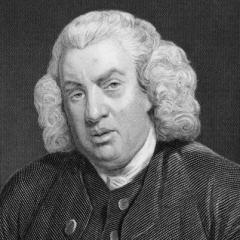
Samuel Johnson
Samuel Johnson was an English writer, poet, and lexicographer, renowned for his comprehensive English dictionary, 'A Dictionary of the English Language', published in 1755. His distinctive writing style and wit have cemented his place as a significant figure in the history of English literature. more
You May Also Like
Source: The works of Samuel Johnson, with Murphy's essay, ed. by R. Lynam
Source: The Works of the English Poets, from Chaucer to Cowper: Including the Series Edited with Prefaces, Biographical and Critical
“In sovereignty there are no gradations.”
Source: Sir Robert Chambers: Law, Literature, and Empire in the Age of Johnson
“See nations slowly wise, and meanly just, to buried merit raise the tardy bust.”
Source: Selected poetry and prose
“The whole world is put in motion by the wish for riches and the dread of poverty.”
Source: The Rambler: In Four Volumes
“Rash oaths, whether kept or broken, frequently produce guilt.”
Source: The Beauties of Samuel Johnson, LL.D.: Consisting of Maxims and Observations, Moral, Critical, and Miscellaneous, to which are Now Added, Biographical Anecdotes of the Doctor, Selected from the Late Productions of Mrs. Piozzi, Mr. Boswell, ...
Source: Selected essays