“Anyone who knows of a provable instance of colour discrimination ought always to expose it.”
Quote by George Orwell
Work
The Collected Essays, Journalism, and Letters of George Orwell: As I please, 1943-1945
The volume includes a range of Orwell's writings during a pivotal period of his life, showcasing his insights on politics, society, and literature. more
Author
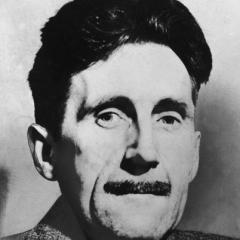
George Orwell
George Orwell, born Eric Arthur Blair, was a British novelist and political critic. Known for his sharp social criticism and profound insights into totalitarianism, Orwell is best remembered for his novels '1984' and 'Animal Farm', which remain influential to this day. more
You May Also Like
Source: Down and Out in Paris and London
“Antisemitism, for instance, is simply not the doctrine of a grown-up person.”
Source: The Complete Works of George Orwell: I have tried to tell the truth, 1943-1944
Source: The Penguin complete novels of George Orwell
Source: A kind of compulsion, 1903-1936
Source: All Art Is Propaganda: Critical Essays
Source: The Complete Works of George Orwell: Our job is to make life worth living, 1949-1950
“Poverty is spiritual halitosis.”
Source: Keep the Aspidistra Flying
Source: The Collected Essays, Journalism, and Letters of George Orwell: As I please, 1943-1945
“The life of an animal is misery and slavery: that is the plain truth.”
Source: George Orwell's Animal Farm