Quotessence
Home / Quotes / Quote by Eberhard Arnold

Quote by Eberhard Arnold

“After all, the living book of God's creation lies open for all to see; it points constantly to the divine calling for which we were placed in nature. Nature is a continual admonition to us, for nowhere has God's creation departed so far from its origin and primeval purpose as in the human race.”

Quote by Eberhard Arnold

Author
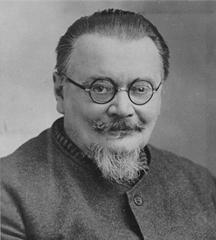
Eberhard Arnold
Eberhard Arnold

Eberhard Arnold, a German writer born on July 26, 1883, and died on November 22, 1935, is known for his profound religious and social criticism. His works have had a significant impact on 20th-century German literature. more

You May Also Like

“We discover too late that we have turned a blind eye to the extinction of a species that is essential to the balance of life in a particular context. Or we discover too late that the importation of a foreign life-form, animal or vegetable, has upset local ecosystems, damaging soil or neighbouring life-forms. We discover that we have come near the end of supplies-of fossil-fuels for example -on which we have built immense structures of routine expectation.”

“And the desire to own property, to take for ourselves things which in no way belong to us, does not stop short at the sun. The air is already bought and sold as a commodity, by health resorts. And what of water? Or waterpower? Why should the earth be parceled out into private hands? Is it any different from the sun? No; the earth belongs to the people who live on it. God intended it for them, but it has been taken over by private individuals. Privare means to steal. Thus private property is stolen property - property stolen from God and from humankind!”

“The world was created because God willed it, but why did He will it? Judaism has maintained, in all of its versions, that this world is the arena that God created for man, half beast and half angel; to prove that he could be a moral being...man was given dominion over nature, but he was commanded to behave towards the rest of creation with justice and compassion. Man lives, always, in tension between his power and the limits set by his conscience.”

“Around the world, we see the results of exploitation which destroys much without taking future generations into account. Protecting the world's forests; stemming desertification and erosion; avoiding the spread of toxic substances harmful to man, animals and plants; protecting the atmosphere; all these can be accomplished only through active and wise cooperation, without borders or political power plays.”

“Before it's too late, we need to make courageous choices that will recreate a strong alliance between man and Earth. We need a decisive 'yes' to care for creation and a strong commitment to reverse those trends that risk making the situation of decay irreversible.”

“Both group effort and individual testimony flow from conviction as to the role of people on earth. In stewardship of the common heritage, a few simple beliefs recur: that all are indeed members of the same human family, that all share in responsibility for the others, that each is capable of responding directly to divine guidance. To seek to translate these into practical action with regard to soil or petroleum or the fish of the sea is not necessarily to do what is directly effective in changing society.”

“But it is important to realize we are all trapped in mental constructs, and so we separate ourselves from reality; the whole world loses its aliveness-or, rather, we lose our ability to sense that aliveness, the sacredness of nature. When we approach nature through the conceptualizing mind, we see a forest as a commodity, a concept. We no longer see it for what it truly is, but for what we want to use it as. It is reduced. This is how it becomes possible for humans to destroy the planet without realizing what they are doing.”

“A protest meeting on the issue of environmental abuse is not a convocation of accusers, it is a convocation of the guilty. The realization ought to clear the smog of self-righteousness that has always conventionally hovered over these occasions, and let us see the work that is to be done.”

“Christians, of all people, should not be destroyers. We should treat nature with an overwhelming respect. We may cut down a tree to build a house, or to make a fire to keep the family warm. But we should not cut down the tree just to cut down the tree. We may, if necessary, bark the cork tree in order to have the use of the bark. But what we should not do is to bark the tree simply for the sake of doing so, and let it dry and stand there a dead skeleton in the wind. To do so is not to treat the tree with integrity.”

“We have the right to rid our houses of ants; but what we have no right to do is to forget to honor the ant as God made it, out in the place where God made the ant to be. When we meet the ant on the sidewalk, we step over him. He is a creature, like ourselves; not made in the image of God, it is true, but equal with man as far as creation is concerned. The ant and the man are both creatures.”