Quotessence
Home / Quotes / Quote by Thomas Harriot

Quote by Thomas Harriot

“Many things they sawe with us as mathematicall instruments, sea compasses... spring clocks that seemed to goe of themselves - and many other things we had - were so strange unto them, and so farre exceeded their capacities to comprehend the reason and meanes how they should be made and done, that they thought they were rather the workes of gods then men.”

Quote by Thomas Harriot

Author
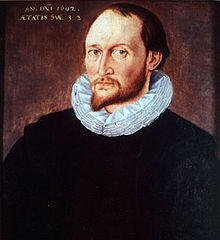
Thomas Harriot
Thomas Harriot

Thomas Harriot was an English astronomer, mathematician, and explorer who lived from 1560 to July 2, 1621. He made significant contributions to the field of astronomy, particularly in the areas of astronomical observations and celestial measurements. Harriot was the first to record the rings of Saturn in detail and conducted in-depth research on solar and lunar eclipses. more

You May Also Like

“No greater glory can be handed down than to conquer the barbarian, to recall the savage and the pagan to civility, to draw the ignorant within the orbit of reason, and to fill with reverence for divinity the godless and the ungodly.”

“I have killed, robbed, and injured too many white men to believe in a good peace. They are medicine, and I would eventually die a lingering death. I had rather die on the field of battle. Look at me, see if I am poor, or my people either. The whites may get me at last, as you say, but I will have good times till then. You are fools to make yourselves slaves to a piece of fat bacon, some hard-tack, and a little sugar and coffee.”

“I surrender this rifle to you through my young son, whom I now desire to teach in this manner that he has become a friend of the Americans. I wish him to learn the habits of the whites and to be educated as their sons are educated. I wish it to be remembered that I was the last man of my tribe to surrender my rifle. This boy has given it to you, and he now wants to know how he is going to make a living.”

“The vast majority of those of Scots lineage living in the Ulster counties in the 18th century had come across, or their people had come across, in the 1690s. And they were victims of famine. Over that decade, 30000-50000 people were fleeing from that disaster. In terms of per capita loss, it was of the same order of magnitude as the Irish famine (of the 19th century).”