Quotessence
Home / Quotes / Quote by Robert Frost

Quote by Robert Frost

“I'm glad of any political freedom they give me, but what I'm interested in is not political freedom. I'm interested in the liberties I take.”

Quote by Robert Frost

Author
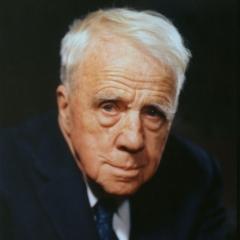
Robert Frost
Robert Frost

Robert Frost, born on March 26, 1874, and died on January 29, 1963, was one of the most renowned poets of the 20th century in the United States. He is known for his profound philosophy and unique poetic style, which often explores themes such as nature, life, and morality. more

You May Also Like

“And sometimes, when I find that sweet solitude, I hear warnings about isolation. Some summers, when I was alone in the wilderness, content in my tiny trailer at the edge of the lake, I would not speak to or see another human being for weeks. There, I could slow it all down. I felt the power of life being lived around and within me. I became like a sun warmed rock in the centre of the stream. The water parted around me, eddied in spirals, and flowed on, gently wearing away all my sharp edges. Once, a man who is my lover and friend, I wanted to be more, came to see me there unexpectedly. I had just split an arm load of wood and was carrying it into the trailer as he appeared. He stayed only briefly. Later he told me, “When I came down the driveway and saw you standing there with the wood in your arms, your face glowing from the wind off the lake and the effort of chopping wood, I thought, ‘She belongs to this place. She’s at home here, alone in the bush. She’s not missing me, doesn’t need me here.’ I felt like an intruder.” His observation surprised me. I heard the voice of my mother warning, “You are too independent. Don’t get too good at being alone or you’ll end up by yourself. Everyone needs someone.” Her fear finds a small corner in me, but I resist the idea that I will be with another only to avoid being alone. Surely, the ability to truly be with myself does not exclude the willingness to fully be with another. I do not seek isolation. The longing for another remains even when I am able to be with myself, although it is smaller, a whisper that tugs at me gently. Even there, in my place of solitude in the wilderness, I found myself at moments wanting to turn to someone and share my awe at the brilliance of the full moon on the still water, the delight of watching otters playing at the edge of the stream. But the loneliness was bittersweet and bearable because I knew myself and the world in a way I sometimes do not when I let my life become too full of doing things that do not really need to be done.”

“To make democracy work, Jayaprakash Narayan suggests, to undo tyranny, it is only necessary for India to return truly to itself. The Ramraj that Gandhi offered is no longer simply Independence, India without the British; it is people's government, the reestablishment of the ancient Indian village republic, a turning away from the secretariats of Delhi and the state capitals. But this is saying nothing; this is to leave India where it is. What looks like a political programme is only clamour and religious excitation. People's government and the idea of the ancient village republic (which may be a fanciful idea, a nationalist myth surviving from the days of the Independence struggle) are not the same thing. Old India has its special cruelties; not all the people are people.”