Quotessence
Home / Quotes / Quote by George Orwell

Quote by George Orwell

“Suddenly they were both leaping around him, shouting 'Traitor!' and 'Thought-criminal!', the little girl imitating her brother in every movement. It was somehow slightly frightening, like the gamboling of tiger cubs which will soon grow up into man-eaters.”

Quote by George Orwell

Book:1984

Work

1984

George Orwell's '1984' is a seminal work of literature that explores themes of government control, individuality, and the erosion of privacy. The story is set in a future where the world is divided into three superstates, each engaged in perpetual war. The protagonist, Winston Smith, works for the Ministry of Truth and is disillusioned with the oppressive regime. The novel delves into the psychological and societal consequences of living under constant surveillance and the struggle for truth and freedom. more

Author

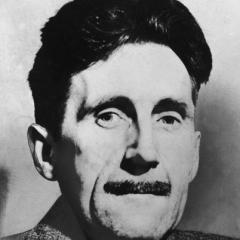
George Orwell
George Orwell

George Orwell, born Eric Arthur Blair, was a British novelist and political critic. Known for his sharp social criticism and profound insights into totalitarianism, Orwell is best remembered for his novels '1984' and 'Animal Farm', which remain influential to this day. more

You May Also Like

“Feelings that would not have disgraced a leader who, now that the snow has begun to fall and the mountain-top is covered in mist, knows that he must lay himself down and die before morning comes, stole upon him, paling the colour of his eyes, giving him, even in the two minutes of his turn on the terrace, the bleached look of withered old age. Yet he would not die lying down; he would find some crag of rock, and there, his eyes fixed on the storm, trying to the end to pierce the darkness, he would die standing. He would never reach R.”

“Anonymous > Quotes > Quotable Quote “I see life as a roadside inn where I have to stay until the coach from the abyss pulls up. I don’t know where it will take me, because I don’t know anything. I could see this inn as a prison, for I’m compelled to wait in it; I could see it as a social centre, for it’s here that I meet others. But I’m neither impatient nor common. I leave who will to stay shut up in their rooms, sprawled out on beds where they sleeplessly wait, and I leave who will to chat in the parlours, from where their songs and voices conveniently drift out here to me. I’m sitting at the door, feasting my eyes and ears on the colours and sounds of the landscape, and I softly sing – for myself alone – wispy songs I compose while waiting.”

“The library was my only blessing. Every time I climbed the stairs, my heart lifted. All day, I looked forward to the happy hours I spent in that beautiful room. My guilt over appa's fate was too heavy to carry up there, and I learned to leave it below, somewhere on the ground floor. I left the house far behind as I walked on the path paved by the books, and every evening, baby Mangalam slept soundly on the bed I made for her on the window seat.”

“A man's words reveal, first, the man. The words are not the man, and yet they reveal him faithfully and are to be identified with him. Out of the abundance of the heart, the man speaks. The foundational nature of all language is therefore metaphorical because every word a man speaks reveals himself—just as God reveals Himself through the Word. Every word spoken ultimately reveals the speaker.”

“A child cannot quarrel with its elders, as I had done, cannot give its furious feelings uncontrolled play, as I had given mine, without experiencing afterwards the pang of remorse and the chill of reaction. A ridge of lighted heath, alive, glancing, devouring, would have been a meet emblem of my mind when I accused and menaced Mrs. Reed: the same ridge, black and blasted after the flames are dead, would have represented as meetly my subsequent condition.”